Meiting Garments logo mark

Manufacturing Guide · 9 min read

How to Get a Clothing Manufacturer Quote: RFQ Checklist

Quick answer: If you are comparing custom apparel suppliers and trying to decide what proof to request before quote comparison, you should not compare factories by unit price first; compare the decision variable most likely to break the order. Thesis: the article must prove which production variable controls the decision, then turn that variable into RFQ fields. A useful clothing manufacturer quote starts with a scoped request, not a request for one headline price. Share the known product inputs, label the decisions that remain open, and compare supplier assumptions before treating any response as a production-ready quote.

factoryBy Meiting Garments Editorial TeamEditorial guidance with factory-process inputPublished · Updated
RFQ PreparationBuilt for brands, sourcing teams, and growth outreach
01

Thesis-driven article plan

This thesis controls the article before any outline is written: you should not compare factories by unit price first; compare the decision variable most likely to break the order. The rest of this guide proves the thesis with factory variables, evidence, buyer options, and a next RFQ path.

  • Thesis: you should not compare factories by unit price first; compare the decision variable most likely to break the order.
  • This thesis controls the article by forcing every section to answer one question: the article must prove which production variable controls the decision, then turn that variable into RFQ fields.
  • Section proof path: buyer situation -> constraints -> options -> factory recommendation -> RFQ fields.
  • CTA logic: the CTA is not a generic contact button; it asks the buyer to send the exact fields required to test the thesis with a factory.
  • The rest of this guide proves the thesis instead of simply listing definitions or repeating common SEO answers.
02

Factory fact snapshot

Use this factory baseline before making a supplier decision. The goal is to connect the topic to real production variables instead of treating it as a generic apparel blog question.

  • MOQ: confirm whether the minimum applies by style, color, fabric, label, packaging item, or decoration setup
  • Sampling time: Meiting usually plans 10-18 working days after reference, fabric, artwork, fit, label, and packing details are confirmed
  • Bulk production: count bulk lead time after sample approval, material confirmation, and production deposit
  • QC: check measurements, fabric shade, decoration placement, labels, packing, carton marks, and shipment readiness
  • 150 pcs: use 150 pcs per style/color as a practical custom clothing benchmark for flexible MOQ quote comparison
  • RFQ: send quantity, size range, artwork, label plan, packaging requirements, delivery country, and launch date
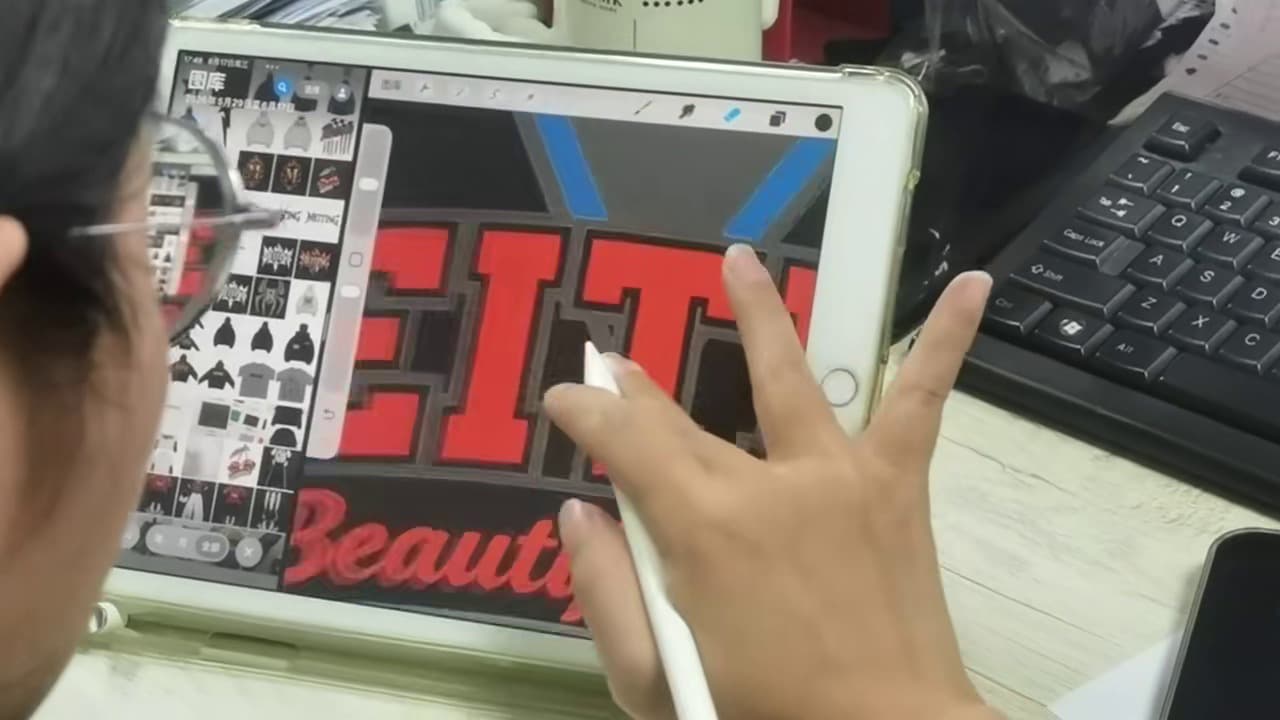
Artwork for a custom clothing order being prepared on an iPad at Meiting Garments
Artwork and references being prepared before a buyer sends an RFQ. Frame from Meiting's own factory floor video — not a stock photo.
03

Start with the buyer question, not a price request

The real question behind an RFQ is usually not simply “what is the price?” It is whether a factory can understand the intended garment, identify the unresolved production choices, and explain what needs to be confirmed before sampling or bulk planning. A reference image can establish direction, but it cannot by itself define fit, material construction, decoration, labels, packing, or delivery scope.

  • State what the garment must achieve: intended product type, fit direction, use case, and target market.
  • Separate confirmed inputs from open questions. An open fabric, print, or label decision should be visible rather than guessed.
  • Ask the supplier which missing inputs affect route feasibility, sample work, or the quote scope.
04

Build one comparable production scope

A comparable RFQ gives every supplier the same decision context. Begin with quantity by style and color, size range, product reference, material direction, decoration, private-label components, packing, destination, and target decision date. Where a tech pack is incomplete, attach references and identify the information that needs development support.

  • Product: reference images, sketch or tech pack, intended fit, measurements if available, and style variations.
  • Material and decoration: composition or handfeel direction, fabric questions, artwork status, placement, and proposed print or embroidery route.
  • Commercial and delivery scope: style-color-size split, labels, hangtags, polybags, cartons, delivery country, launch context, and sample objective.
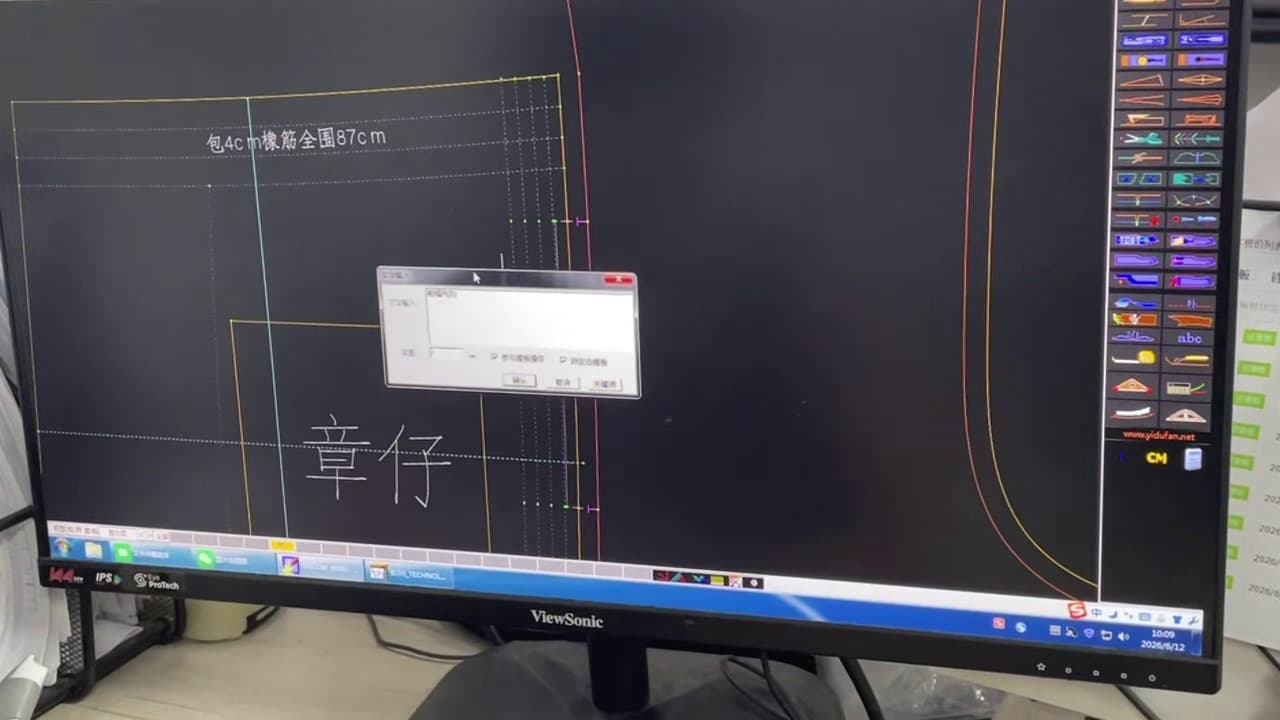
Garment pattern being drafted in CAD software at Meiting Garments pattern room
Pattern work is one of the details a complete quote request can surface. Frame from Meiting's own factory floor video — not a stock photo.
05

Compare assumptions before comparing numbers

Two responses are only comparable when they address the same route. One supplier may be pricing a standard fabric, another may include pattern development, and a third may exclude labels, packing, a sample, or delivery preparation. A lower number is not automatically a lower like-for-like cost if its assumptions are different or missing.

  • Keep the supplier's stated inclusions, exclusions, and open questions beside each response.
  • Ask whether the material, decoration setup, component package, sample, and packing route match the submitted brief.
  • Use a written version of the scope whenever a change is made, so the next response can be compared against the same baseline.
06

Use the sample stage to close high-risk decisions

A sample is most useful when the buyer states what it must validate. Depending on the project, that may be fit, material handfeel, wash direction, print or embroidery placement, labeling, or packing. Meiting's sample-development target is 10–18 working days only after the project scope is complete and confirmed; it is not a universal lead-time promise for every product or revision.

  • Record the sample objective before development begins and keep approval comments in writing.
  • Identify which later changes could require a material, fit, decoration, or component review.
  • Treat an approved sample and confirmed scope as the reference point for bulk planning, not an early estimate or a reference photo.
07

What makes this different from a standard decoration and embellishment explanation

This is different from standard industry explanation because it connects the search question to Meiting's real factory variables instead of repeating a definition. Factory rule: decoration must be tested on the real fabric before bulk approval because stitch density, print handfeel, puff height, heat pressure, and placement tolerance change by garment. MOQ logic: changes when embroidery, puff print, screen print, rhinestones, applique, or heat transfer requires its own setup, strike-off, machine time, and reject allowance. Cost structure: is driven by artwork preparation, color count, stitch count, print setup, strike-off samples, operator time, placement checks, label packing, and QC. Production risk: comes from puckering, cracking, dye migration, off-center placement, wrong thread color, unstable rhinestones, or decoration failing after wash testing. Region/export difference: matters because buyers may need decoration durability proof, care-label wording, and carton packing that protects raised surfaces during export.

  • Buyer stage: this is for brands deciding whether a decoration idea is production-safe before committing to bulk fabric and trims.
  • Decision logic: compare the factory route, choose the setup that matches the buyer stage, and check the highest production risk before sample approval.
  • RFQ fields that change by product: artwork file, decoration method, color count, placement size, fabric GSM, strike-off request, wash test need, size range, delivery country.
  • Action path: send the product reference, target quantity by style/color, size range, artwork file, label or packaging plan, delivery country, and launch date before asking for a production quote.
  • Factory proof to request: sample photos, similar product case, process video, decoration test, QC checklist, packing method, and carton mark example where relevant.
08

Decision path for this buying situation

Decision Stage: Risk Assessment. Decision Lens: Buyer Lens. This topic enters the purchase path because the buyer is trying to choose a material route before quote comparison because fabric affects MOQ, cost, sample accuracy, shrinkage, and bulk stability. The goal is not to make the article sound different; the goal is to lower the buyer's decision cost before the next RFQ step.

  • Decision blockers: the buyer does not know which fabric options are in stock and which require custom booking; the buyer worries that handfeel, shade, shrinkage, or wash effect will change between sample and bulk; the buyer cannot compare suppliers until fabric composition, GSM, color, and testing expectations are clear.
  • Decision nodes: decide whether to use available fabric, custom fabric, garment dye, snow wash, acid wash, or denim development; confirm fabric GSM, composition, color target, shrinkage tolerance, wash effect, and sample approval rules; select the supplier that can show fabric swatches, sourcing route, test comments, and bulk consistency plan.
  • Decision output: request fabric options with GSM, composition, color, handfeel, MOQ, sampling time, wash risk, shrinkage tolerance, and delivery country.
  • Commercial validation: Can enter RFQ: yes, because fabric uncertainty becomes a structured sourcing request | Reduces uncertainty: yes, because sample-to-bulk material risks are named | Supports supplier selection: yes, because fabric proof becomes part of the quote | Clear next action: ask for swatches or material alternatives before sample approval.
  • Next RFQ action: use the CTA on this page to send quantity by style/color, size range, fabric or GSM target, artwork, decoration method, label or packaging scope, delivery country, and launch date.
09

Evidence Graph for this recommendation

Evidence Graph: this article separates generic statements from evidence that can support a buying decision. Information Gain Validation: generic SERP answers usually explain the topic; this guide adds Meiting's RFQ fields, factory route logic, QC checkpoints, and quote-risk evidence.

  • Evidence tier: SERP gap - most public articles explain the topic, but they rarely connect it to quote scope, sample approval, and supplier selection.
  • Evidence tier: RFQ - the buyer must provide quantity by style/color, size range, fabric or GSM target, artwork, decoration method, label or packaging scope, delivery country, and launch date.
  • Evidence tier: factory SOP - Meiting's internal route starts with sample brief, material confirmation, decoration setup, QC checkpoints, packing method, and export handoff.
  • Evidence tier: QC - the recommendation is only useful if it can be checked through measurements, fabric shade, decoration placement, labels, packing, carton marks, and shipment readiness.
  • Information Gain Validation: generic SERP answers usually explain the topic; this guide adds Meiting's RFQ fields, factory route logic, QC checkpoints, and quote-risk evidence.
010

Decision Simulation: choose the route before RFQ

Buyer Situation: comparing custom apparel suppliers and trying to decide what proof to request before quote comparison. Buyer Constraints: MOQ may change by style/color, fabric route, decoration setup, label plan, and packing scope; the quote is not comparable until sample, QC, packing, and delivery assumptions are equal; a buyer without a clear RFQ will receive vague pricing instead of a usable production route.

  • Buyer Situation: comparing custom apparel suppliers and trying to decide what proof to request before quote comparison.
  • Buyer Constraints: MOQ may change by style/color, fabric route, decoration setup, label plan, and packing scope; the quote is not comparable until sample, QC, packing, and delivery assumptions are equal; a buyer without a clear RFQ will receive vague pricing instead of a usable production route.
  • Option A: ask for a fast unit-price quote first. Pros: quick response and easy supplier comparison on the surface. Cons: high risk of hidden setup, sample, QC, packing, or freight changes later.
  • Option B: send a complete RFQ before comparing factories. Pros: better quote accuracy and clearer supplier capability signals. Cons: requires more preparation before the first supplier message.
  • Option C: start with a sample-development review before asking bulk price. Pros: best when design, fit, fabric, or decoration risk is still unresolved. Cons: slower than asking for a rough price, but much safer for real production.
  • Factory Recommendation: start with Option B unless the design is technically unclear; if the product risk is high, move to Option C before bulk costing.
  • If I were you, I would start with Option B unless the design is technically unclear; if the product risk is high, move to Option C before bulk costing and then send one RFQ that tests this decision with real factory answers.
  • Next RFQ: send quantity by style/color, size range, fabric or GSM target, artwork, decoration method, label or packaging scope, delivery country, launch date, and the specific proof you need before sample approval.
  • Post-Publish Validation: track GSC impressions, CTR, average position, guide-to-service clicks, RFQ assisted paths, and whether buyers submit more complete quote requests.
011

Editorial quality control before publishing

This guide is not a directly published AI draft. AI can help organize research, but Meiting treats every technical blog as a human-reviewed buyer decision page: factory facts, sample experience, quote logic, and post-publish ranking signals are checked before the content is treated as useful.

  • Human review: production, sampling, fabric, decoration, MOQ, QC, packing, and export claims are checked against Meiting's factory workflow before publishing.
  • Factory data: the guide uses real operating benchmarks such as 150 pcs MOQ planning, 10-18 working day sampling windows, product sample references, QC checks, and packing or shipment steps where relevant.
  • Sample/case inputs: examples are tied back to product samples, factory process videos, buyer RFQ questions, or case-study style decisions instead of generic wording.
  • AI draft risk control: content is rewritten for buyer intent, verified terminology, and information gain so it is not a thin AI summary with no original data source.
  • Post-publish validation: Search Console impressions, CTR, average position, guide-to-service clicks, and RFQ-assisted paths are monitored after indexing.

Checklist

  • task_altProduct reference, sketch, tech pack, or physical sample
  • task_altIntended fit, measurement information, and size range
  • task_altQuantity split by style, color, and size
  • task_altFabric composition, handfeel, finish, and GSM questions where relevant
  • task_altArtwork files, placement, and decoration questions
  • task_altNeck label, hangtag, polybag, carton, and barcode requirements
  • task_altDelivery country, target decision date, and launch context
  • task_altSample objective and a list of decisions that remain open

Common Mistakes

  • errorAsking for a final price while leaving product scope, material, or decoration assumptions unstated
  • errorComparing supplier numbers without recording what is included, excluded, or still open
  • errorTreating a reference image as a complete manufacturing specification
  • errorChanging labels, packaging, artwork, or sizing after sample approval without revisiting the route

Want us to review your project details?

Send your tech pack, reference photos, quantity, target timeline, or current supplier problem. We will respond with a practical next step.

Send RFQ