Meiting Garments logo mark

Pricing & Flexible MOQ · 8 min read

Custom Clothing Flexible MOQ Guide for Streetwear and Private Label Brands

Quick answer: If you are moving from a garment sample into retail-ready private label production with labels, hangtags, polybags, carton marks, and barcode needs, you should not treat packaging as a final add-on; lock label, barcode, carton, and warehouse rules before sample approval. Thesis: the article must prove that packaging decisions affect MOQ, cost, QC, and shipment readiness before bulk production starts. MOQ is not only a sewing number. For custom hoodies, T-shirts, and private label clothing, MOQ is shaped by fabric availability, dyeing, trims, decoration setup, labels, packaging, and how many colors or sizes you want to launch with a custom streetwear manufacturer. For first drops, the flexible MOQ clothing manufacturer page explains how focused style/color planning keeps custom production realistic.

factoryBy Meiting Garments Editorial TeamEditorial guidance with factory-process input
Flexible MOQ GuideBuilt for brands, sourcing teams, and growth outreach
01

Thesis-driven article plan

This thesis controls the article before any outline is written: you should not treat packaging as a final add-on; lock label, barcode, carton, and warehouse rules before sample approval. The rest of this guide proves the thesis with factory variables, evidence, buyer options, and a next RFQ path.

  • Thesis: you should not treat packaging as a final add-on; lock label, barcode, carton, and warehouse rules before sample approval.
  • This thesis controls the article by forcing every section to answer one question: the article must prove that packaging decisions affect MOQ, cost, QC, and shipment readiness before bulk production starts.
  • Section proof path: buyer situation -> constraints -> options -> factory recommendation -> RFQ fields.
  • CTA logic: the CTA is not a generic contact button; it asks the buyer to send the exact fields required to test the thesis with a factory.
  • The rest of this guide proves the thesis instead of simply listing definitions or repeating common SEO answers.
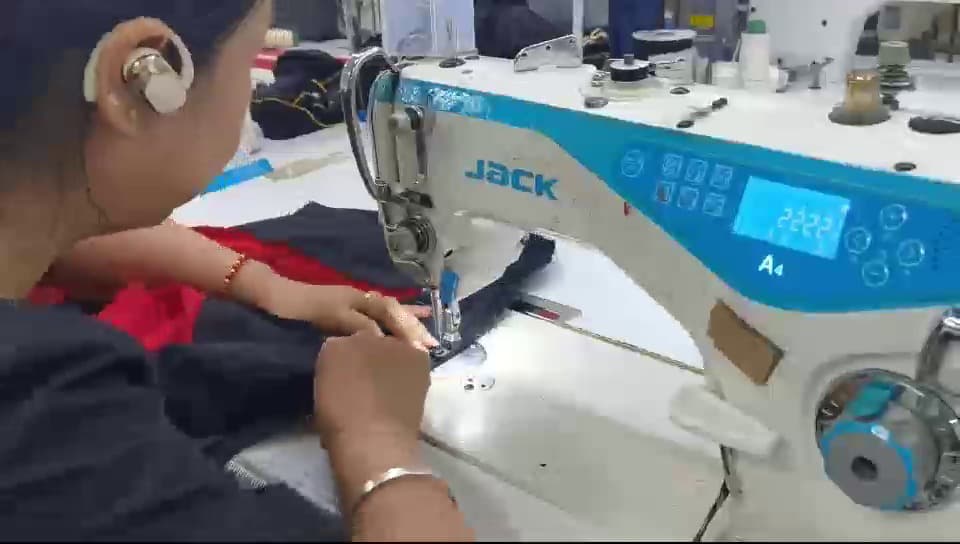
Close view of an operator working at an industrial sewing machine at Meiting Garments
Line capacity is what MOQ math is really about. Frame from Meiting's own factory floor video — not a stock photo.
02

Factory fact snapshot

Use this factory baseline before making a supplier decision. The goal is to connect the topic to real production variables instead of treating it as a generic apparel blog question.

  • MOQ: confirm whether the minimum applies by style, color, fabric, label, packaging item, or decoration setup
  • Sampling time: Meiting usually plans 10-18 working days after reference, fabric, artwork, fit, label, and packing details are confirmed
  • Bulk production: count bulk lead time after sample approval, material confirmation, and production deposit
  • QC: check measurements, fabric shade, decoration placement, labels, packing, carton marks, and shipment readiness
  • 150 pcs: use 150 pcs per style/color as a practical custom clothing benchmark for flexible MOQ quote comparison
  • RFQ: send quantity, size range, artwork, label plan, packaging requirements, delivery country, and launch date
03

Start with style-color count

A flexible MOQ clothing manufacturer can often support a focused launch, but each style and color creates its own material and production setup. The easiest way to lower risk is to reduce colors before reducing quality.

  • One strong style/color is easier than five weak variations
  • Size range should match the real target market
  • Reorder planning matters more than a large first run
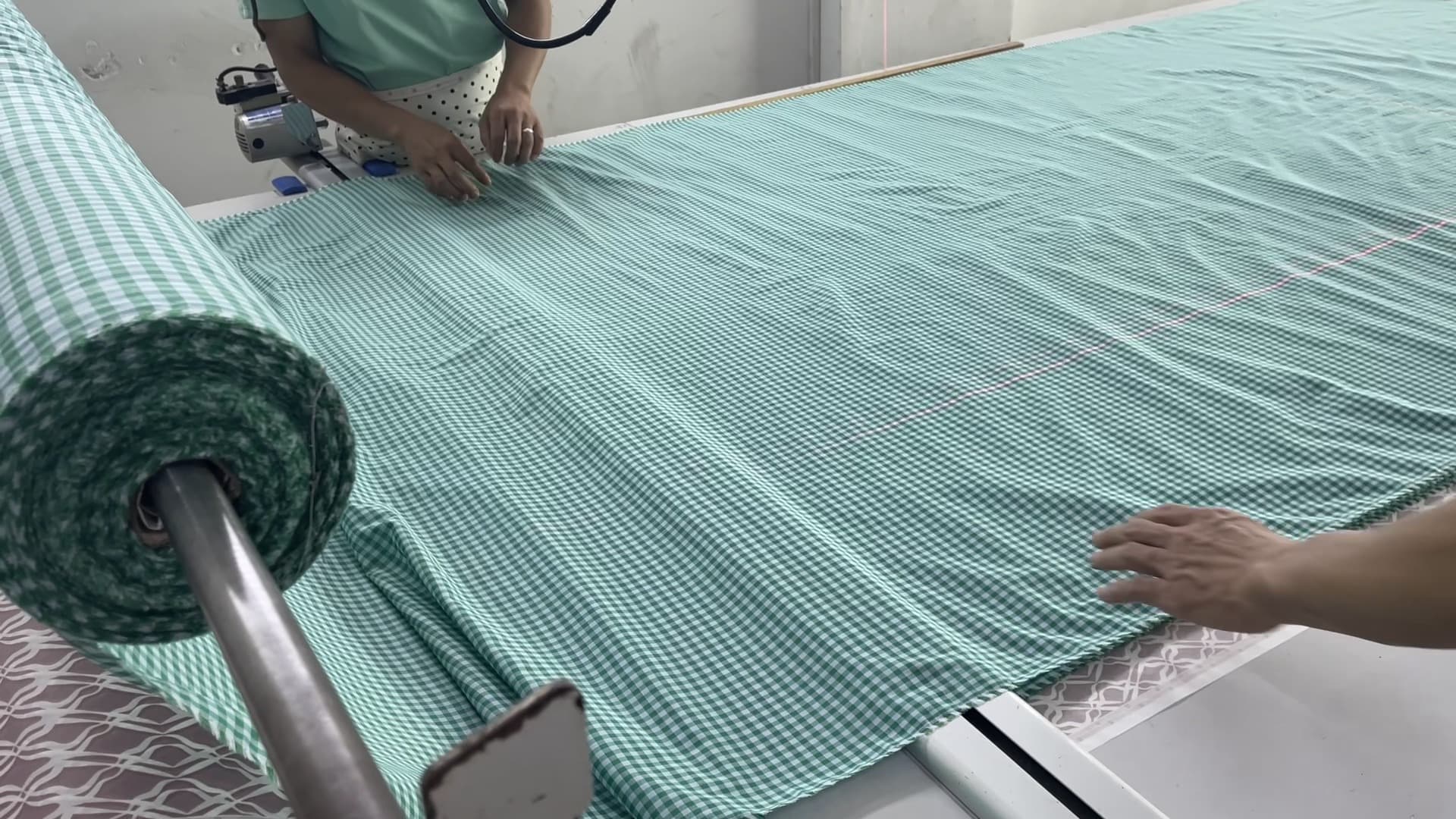
Fabric roll being spread on the cutting table at Meiting Garments before bulk cutting
Fabric consumption per cut is a core MOQ driver. Frame from Meiting's own factory floor video — not a stock photo.
04

Check material and trim minimums separately

Fabric mills, label suppliers, zipper suppliers, and packaging vendors may each have their own minimums. A garment MOQ of 150 pcs can still require smarter planning around labels or custom trims.

  • Use shared labels across several styles
  • Choose available fabric for first tests
  • Avoid custom packaging until demand is proven
05

Decoration changes the real minimum

Embroidery, screen print, puff print, washing, applique, and patches each add setup work. For flexible MOQ programs, decoration should be selected for repeatability and QC control.

  • Confirm strike-off before bulk
  • Limit artwork colors where possible
  • Document placement for final QC
06

What makes this different from a standard private label packaging explanation

This is different from standard industry explanation because it connects the search question to Meiting's real factory variables instead of repeating a definition. Factory rule: packaging is not only a design item; it must match garment folding, size ratio, barcode position, carton marks, warehouse receiving rules, and the final packing line workflow. MOQ logic: changes because labels, hangtags, woven patches, polybags, and cartons can each have separate supplier minimums even when the garment MOQ is 150 pcs per style/color. Cost structure: is driven by label mold, hangtag paper, string, polybag thickness, sticker or barcode printing, carton size, packing labor, and whether each size needs a different SKU or barcode. Production risk: comes from wrong care-label language, mismatched barcode files, polybag size errors, carton marks that fail warehouse receiving, or approving garment samples before label artwork is locked. Region/export difference: matters because US and European buyers may use different care-label language, barcode formats, carton mark rules, and receiving warehouse requirements.

  • Buyer stage: this is for brand founders moving from plain samples into retail-ready private label orders, not for buyers only comparing garment unit price.
  • Decision logic: compare the factory route, choose the setup that matches the buyer stage, and check the highest production risk before sample approval.
  • RFQ fields that change by product: label size, hangtag size, polybag size, barcode file, carton marks, folding method, size ratio, delivery country, warehouse receiving rule.
  • Action path: send the product reference, target quantity by style/color, size range, artwork file, label or packaging plan, delivery country, and launch date before asking for a production quote.
  • Factory proof to request: sample photos, similar product case, process video, decoration test, QC checklist, packing method, and carton mark example where relevant.
07

Decision path for this buying situation

Decision Stage: Execution. Decision Lens: Risk Lens. This topic enters the purchase path because the buyer is moving from garment samples to retail-ready product and needs label, packaging, barcode, carton, and warehouse requirements aligned before production. The goal is not to make the article sound different; the goal is to lower the buyer's decision cost before the next RFQ step.

  • Decision blockers: the buyer thinks garment MOQ and packaging MOQ are the same when labels, hangtags, polybags, and cartons may each have separate minimums; the buyer has not prepared barcode, care-label language, carton marks, or warehouse receiving rules; the buyer worries packaging mistakes will delay shipment after garments are already finished.
  • Decision nodes: decide which packaging items are required for the first run and which can wait for reorder; confirm whether the factory or a separate packaging supplier controls each item and MOQ; lock label artwork, barcode files, polybag size, carton marks, and packing method before sample approval.
  • Decision output: send label artwork, hangtag size, polybag size, barcode file, carton marks, folding method, quantity by size, delivery country, and warehouse receiving rules.
  • Commercial validation: Can enter RFQ: yes, because packaging decisions are converted into exact quote fields | Reduces uncertainty: yes, because it separates garment MOQ from label and packing supplier minimums | Supports supplier selection: yes, because it shows whether the factory can manage retail-ready packing | Clear next action: request a packaging MOQ and packing-line quote with garment production.
  • Next RFQ action: use the CTA on this page to send quantity by style/color, size range, fabric or GSM target, artwork, decoration method, label or packaging scope, delivery country, and launch date.
08

Evidence Graph for this recommendation

Evidence Graph: this article separates generic statements from evidence that can support a buying decision. Information Gain Validation: generic SERP answers explain private labels; this guide adds packaging-specific MOQ, barcode, carton, packing-line, and warehouse receiving evidence.

  • Evidence tier: SERP gap - most public articles explain the topic, but they rarely connect it to quote scope, sample approval, and supplier selection.
  • Evidence tier: RFQ - the buyer must provide quantity by style/color, size range, fabric or GSM target, artwork, decoration method, label or packaging scope, delivery country, and launch date.
  • Evidence tier: factory SOP - Meiting's internal route starts with sample brief, material confirmation, decoration setup, QC checkpoints, packing method, and export handoff.
  • Evidence tier: QC - the recommendation is only useful if it can be checked through measurements, fabric shade, decoration placement, labels, packing, carton marks, and shipment readiness.
  • Information Gain Validation: generic SERP answers explain private labels; this guide adds packaging-specific MOQ, barcode, carton, packing-line, and warehouse receiving evidence.

Checklist

  • task_altConfirm MOQ by style/color
  • task_altConfirm fabric availability before sampling
  • task_altSeparate garment MOQ from label and packaging MOQ
  • task_altConfirm decoration setup cost
  • task_altUse a PP sample as the bulk standard
  • task_altPlan reorder quantities and repeat fabric route
  • task_altTarget quantity by style/color

Common Mistakes

  • errorAsking for many colors in the first run
  • errorComparing unit price without checking what is included
  • errorIgnoring label and packaging minimums
  • errorChanging fabric after quotation

Want us to review your project details?

Send your tech pack, reference photos, quantity, target timeline, or current supplier problem. We will respond with a practical next step.

Send RFQ