Meiting Garments logo mark

Flexible MOQ · 10 min read

Small Batch Clothing Production vs Bulk Production

Quick answer: If you are launching a first streetwear or apparel order and trying to keep quantity low without making sampling or unit cost fail, you should not choose a factory only by its advertised minimum; choose a development-order route that protects sample quality and reorder stability. Thesis: the article must prove that MOQ is a tradeoff between setup cost, sample accuracy, fabric choice, and reorder planning. Small-batch clothing production versus bulk is not a simple quantity decision. The comparison starts with what the buyer still needs to validate, how the order is split across styles and colors, and which fabric, decoration, label, packing, and sample choices still need confirmation.

factoryBy Meiting Garments Editorial TeamEditorial guidance with factory-process inputPublished · Updated
First-Run PlanningBuilt for brands, sourcing teams, and growth outreach
01

Thesis-driven article plan

This thesis controls the article before any outline is written: you should not choose a factory only by its advertised minimum; choose a development-order route that protects sample quality and reorder stability. The rest of this guide proves the thesis with factory variables, evidence, buyer options, and a next RFQ path.

  • Thesis: you should not choose a factory only by its advertised minimum; choose a development-order route that protects sample quality and reorder stability.
  • This thesis controls the article by forcing every section to answer one question: the article must prove that MOQ is a tradeoff between setup cost, sample accuracy, fabric choice, and reorder planning.
  • Section proof path: buyer situation -> constraints -> options -> factory recommendation -> RFQ fields.
  • CTA logic: the CTA is not a generic contact button; it asks the buyer to send the exact fields required to test the thesis with a factory.
  • The rest of this guide proves the thesis instead of simply listing definitions or repeating common SEO answers.
02

Factory fact snapshot

Use this factory baseline before making a supplier decision. The goal is to connect the topic to real production variables instead of treating it as a generic apparel blog question.

  • MOQ: confirm whether the minimum applies by style, color, fabric, label, packaging item, or decoration setup
  • Sampling time: Meiting usually plans 10-18 working days after reference, fabric, artwork, fit, label, and packing details are confirmed
  • Bulk production: count bulk lead time after sample approval, material confirmation, and production deposit
  • QC: check measurements, fabric shade, decoration placement, labels, packing, carton marks, and shipment readiness
  • 150 pcs: use 150 pcs per style/color as a practical custom clothing benchmark for flexible MOQ quote comparison
  • RFQ: send quantity, size range, artwork, label plan, packaging requirements, delivery country, and launch date
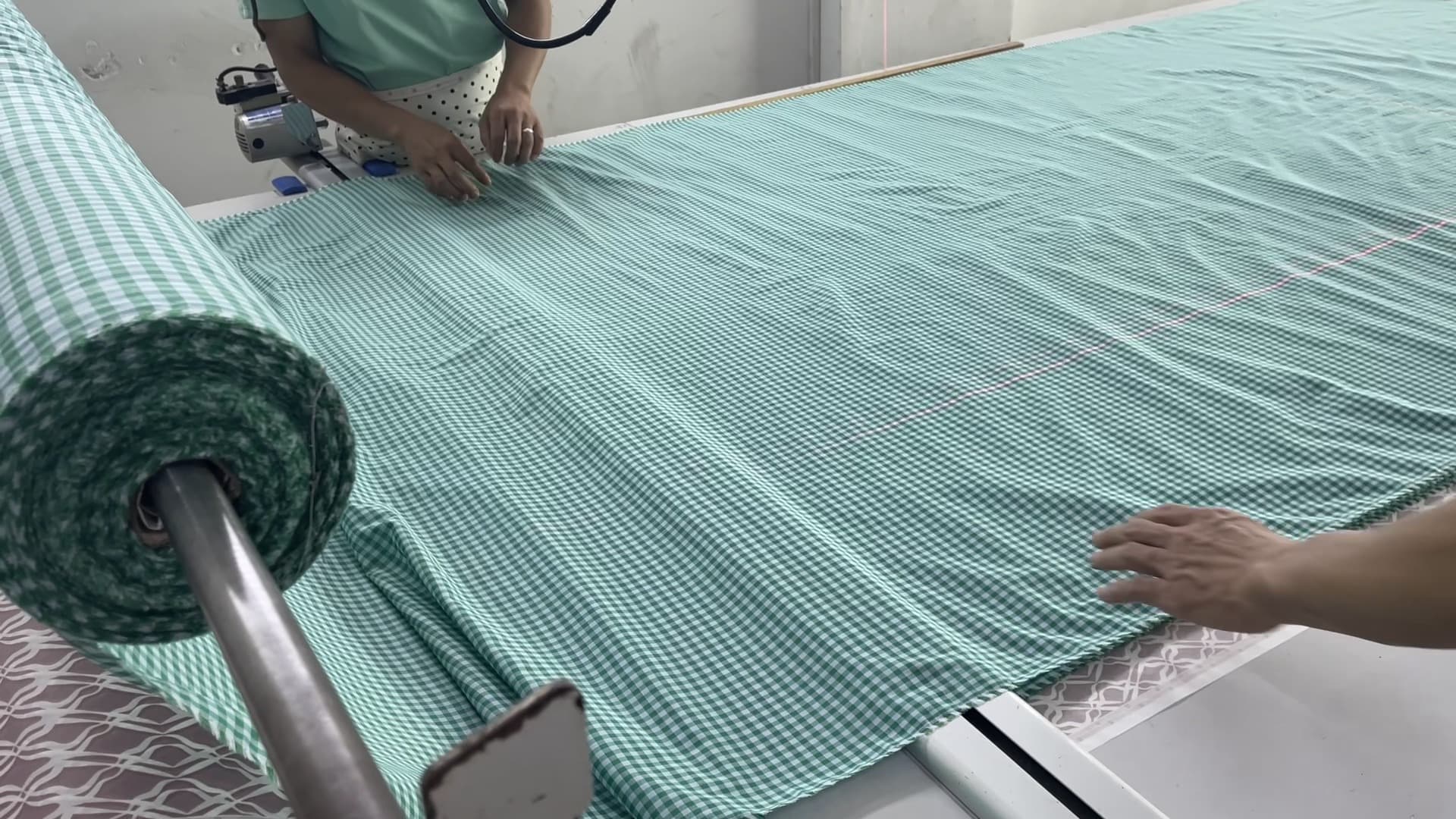
Fabric roll being spread on the cutting table at Meiting Garments before bulk cutting
Fabric spreading and cutting show why the product route matters alongside total quantity. Frame from Meiting's own factory floor video — not a stock photo.
03

Define what the first run needs to prove

A first run may need to test fit, material handfeel, decoration, private-label components, packing, demand, or several of these at once. Define that purpose before selecting a quantity. It gives the buyer and factory a shared way to decide whether a focused route or a larger commitment is appropriate for the product as specified.

  • Name the decision that the first run must support: product approval, market feedback, replenishment planning, or another project-specific goal.
  • Keep style, color, and size splits visible because a headline quantity can hide a fragmented production route.
  • Distinguish a sample objective from a production objective; one does not automatically settle the other.
04

See the variables behind a small batch or bulk route

Quantity affects planning, but it is not the only constraint. Custom fabric booking, garment construction, a color split, print or embroidery setup, labels, packaging, and carton requirements can each change the practical route. The buyer should ask which variables drive the minimum for the exact product rather than assume one number applies to every garment.

  • Fabric route: confirm whether the selected material is available, needs sourcing, or needs custom development.
  • Decoration and components: ask whether print, embroidery, labels, hangtags, polybags, or cartons have their own setup or minimums.
  • Production split: show the quantity by style and color before asking whether a route is feasible.
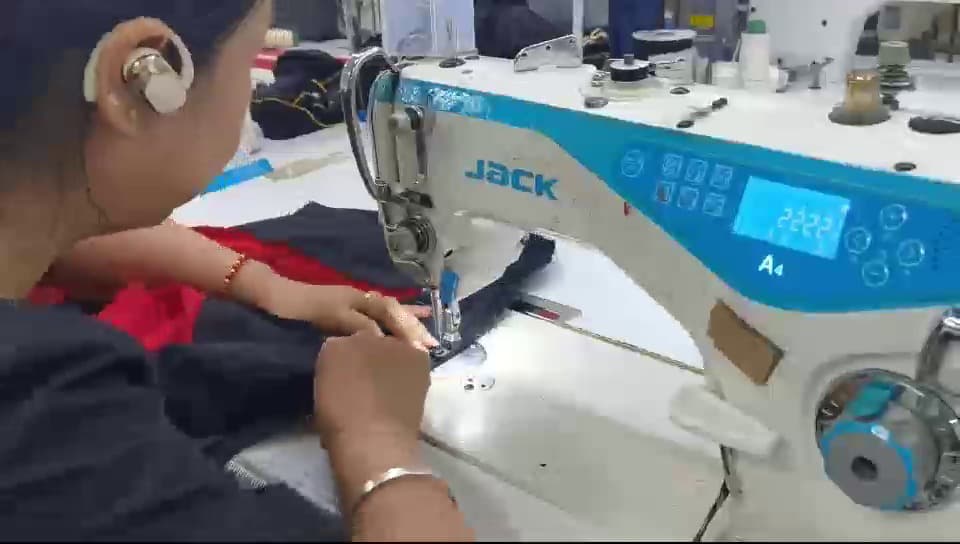
Close view of an operator working at an industrial sewing machine at Meiting Garments
The sewing floor is where a first-run route becomes a production plan. Frame from Meiting's own factory floor video — not a stock photo.
05

Treat 150 pcs as a conditional planning route

Meiting may discuss routes from 150 pcs per style/color where the product, fabric, decoration, color and size split, and production route allow it. This is a conditional planning starting point, not a universal MOQ or a commitment for every product. The exact minimum must be confirmed against the actual brief and supplier route.

  • Ask for a route-specific MOQ confirmation instead of applying 150 pcs to every fabric, finish, or component package.
  • Use the first quote to surface what would change the minimum, rather than assuming a larger order removes all production constraints.
  • Keep alternate options visible, such as simplifying the style-color split or separating a component decision for later review.
06

Compare routes against the proof that is still missing

Quantity does not select a route by itself. A focused small-batch route and a larger bulk route can each be evaluated against the proof the buyer still needs: a stable sample, material confirmation, fit approval, decoration review, component scope, or a repeatable replenishment plan. The comparison should surface the next question to resolve, not prescribe one production route for every project.

  • A focused route may be worth evaluating when fit, material, decoration, or product validation is still open and the supplier confirms feasibility for the actual brief.
  • A larger route may be worth evaluating when the sample and scope are stable and the remaining question is repeatability or replenishment planning.
  • Ask for project-specific guidance on feasibility, timing, and quote scope; neither label guarantees cost, availability, or production suitability.
07

What makes this different from a standard flexible MOQ custom clothing explanation

This is different from standard industry explanation because it connects the search question to Meiting's real factory variables instead of repeating a definition. Factory rule: flexible MOQ is a production route, not a slogan; the factory still needs cutting efficiency, fabric availability, decoration setup, label packing, QC time, and export packing to make a small run workable. MOQ logic: changes by style/color, fabric, trim, decoration, and packing item; 150 pcs per style/color is a practical custom benchmark, while 50 pcs usually works better for simpler routes or blanks. Cost structure: is driven by small-run setup cost, sample fee, fabric minimums, decoration setup, label minimums, packing labor, QC time, and freight that is spread over fewer units. Production risk: comes from splitting too many colors, changing materials after sample approval, asking for custom labels too late, or comparing flexible MOQ quotes without checking excluded costs. Region/export difference: matters because freight, cartons, import handling, and delivery country can make a small order look cheap at factory level but expensive landed.

  • Buyer stage: this is for startup founders planning the first market-validating run before scaling into repeat orders.
  • Decision logic: compare the factory route, choose the setup that matches the buyer stage, and check the highest production risk before sample approval.
  • RFQ fields that change by product: first-run quantity, style/color count, fabric GSM, decoration method, label package, packing method, target budget, launch date, delivery country.
  • Action path: send the product reference, target quantity by style/color, size range, artwork file, label or packaging plan, delivery country, and launch date before asking for a production quote.
  • Factory proof to request: sample photos, similar product case, process video, decoration test, QC checklist, packing method, and carton mark example where relevant.
08

Decision path for this buying situation

Decision Stage: Comparison. Decision Lens: Trader Lens. This topic enters the purchase path because the buyer is comparing whether a small first run can become a real order without destroying unit cost, sample quality, or reorder stability. The goal is not to make the article sound different; the goal is to lower the buyer's decision cost before the next RFQ step.

  • Decision blockers: the buyer treats MOQ as the main priority but does not know which setup costs still exist at small quantity; the buyer is unsure whether 150 pcs per style/color is realistic for their product and decoration method; the buyer worries that pushing MOQ too low will reduce fabric choices, QC room, or supplier attention.
  • Decision nodes: decide whether to reduce color count, simplify decoration, or increase quantity for better unit economics; compare MOQ by factory route: blank sourcing, cut-and-sew, custom fabric, embroidery, washing, labels, and packaging; choose whether the first order is a market test, a launch drop, or a repeatable production route.
  • Decision output: send a flexible MOQ RFQ with target quantity by style/color, must-have decoration, acceptable fabric alternatives, label scope, delivery country, and reorder expectation.
  • Commercial validation: Can enter RFQ: yes, because MOQ negotiation becomes a controlled quote scenario | Reduces uncertainty: yes, because it explains why minimums exist and how to adjust the scope | Supports supplier selection: yes, because it compares factories by setup logic rather than slogans | Clear next action: ask for the MOQ route and the cost change at 150, 300, and 500 pcs.
  • Next RFQ action: use the CTA on this page to send quantity by style/color, size range, fabric or GSM target, artwork, decoration method, label or packaging scope, delivery country, and launch date.
09

Evidence Graph for this recommendation

Evidence Graph: this article separates generic statements from evidence that can support a buying decision. Information Gain Validation: generic SERP answers define MOQ; this guide adds factory setup logic, 150 pcs planning, cost movement, and RFQ fields for first-run buyers.

  • Evidence tier: SERP gap - most public articles explain the topic, but they rarely connect it to quote scope, sample approval, and supplier selection.
  • Evidence tier: RFQ - the buyer must provide quantity by style/color, size range, fabric or GSM target, artwork, decoration method, label or packaging scope, delivery country, and launch date.
  • Evidence tier: factory SOP - Meiting's internal route starts with sample brief, material confirmation, decoration setup, QC checkpoints, packing method, and export handoff.
  • Evidence tier: QC - the recommendation is only useful if it can be checked through measurements, fabric shade, decoration placement, labels, packing, carton marks, and shipment readiness.
  • Information Gain Validation: generic SERP answers define MOQ; this guide adds factory setup logic, 150 pcs planning, cost movement, and RFQ fields for first-run buyers.
010

Decision Simulation: choose the route before RFQ

Buyer Situation: launching a first streetwear or apparel order and trying to keep quantity low without making sampling or unit cost fail. Buyer Constraints: very flexible MOQ can limit fabric choices, decoration methods, and supplier attention; 150 pcs per style/color is often a practical benchmark only after product scope is clear; MOQ negotiation works better when color count, decoration, packaging, and reorder expectations are realistic.

  • Buyer Situation: launching a first streetwear or apparel order and trying to keep quantity low without making sampling or unit cost fail.
  • Buyer Constraints: very flexible MOQ can limit fabric choices, decoration methods, and supplier attention; 150 pcs per style/color is often a practical benchmark only after product scope is clear; MOQ negotiation works better when color count, decoration, packaging, and reorder expectations are realistic.
  • Option A: pursue the smallest possible order quantity. Pros: lowest cash risk at the start. Cons: may increase unit cost or reduce production quality and fabric options.
  • Option B: simplify the first drop to reach a workable MOQ. Pros: better quote accuracy and stronger sample-to-bulk path. Cons: requires narrowing colors, decoration, or packaging.
  • Option C: split development sample and bulk decision. Pros: safer when the product is not proven yet. Cons: slower than ordering immediately.
  • Factory Recommendation: use Option B for launch drops and Option C for unproven designs; avoid Option A unless the garment is very simple.
  • If I were you, I would use Option B for launch drops and Option C for unproven designs; avoid Option A unless the garment is very simple and then send one RFQ that tests this decision with real factory answers.
  • Next RFQ: send quantity by style/color, size range, fabric or GSM target, artwork, decoration method, label or packaging scope, delivery country, launch date, and the specific proof you need before sample approval.
  • Post-Publish Validation: track whether buyers click flexible MOQ pages and submit quantity, color count, decoration, and reorder expectations.
011

Editorial quality control before publishing

This guide is not a directly published AI draft. AI can help organize research, but Meiting treats every technical blog as a human-reviewed buyer decision page: factory facts, sample experience, quote logic, and post-publish ranking signals are checked before the content is treated as useful.

  • Human review: production, sampling, fabric, decoration, MOQ, QC, packing, and export claims are checked against Meiting's factory workflow before publishing.
  • Factory data: the guide uses real operating benchmarks such as 150 pcs MOQ planning, 10-18 working day sampling windows, product sample references, QC checks, and packing or shipment steps where relevant.
  • Sample/case inputs: examples are tied back to product samples, factory process videos, buyer RFQ questions, or case-study style decisions instead of generic wording.
  • AI draft risk control: content is rewritten for buyer intent, verified terminology, and information gain so it is not a thin AI summary with no original data source.
  • Post-publish validation: Search Console impressions, CTR, average position, guide-to-service clicks, and RFQ-assisted paths are monitored after indexing.

Checklist

  • task_altFirst-run validation objective
  • task_altProduct reference, target fit, and material direction
  • task_altQuantity split by style, color, and size
  • task_altFabric availability or custom-development questions
  • task_altDecoration method and artwork setup questions
  • task_altPrivate-label and packaging components
  • task_altSample-review criteria and approval record
  • task_altDelivery country and decisions requiring supplier confirmation

Common Mistakes

  • errorTreating a single MOQ number as a universal promise for all products and components
  • errorChoosing a quantity before defining what the first run must validate
  • errorHiding style, color, or size splits inside one total quantity
  • errorAssuming a larger run eliminates the need to approve material, fit, decoration, labels, or packing

Want us to review your project details?

Send your tech pack, reference photos, quantity, target timeline, or current supplier problem. We will respond with a practical next step.

Send RFQ