01Thesis-driven article plan
This thesis controls the article before any outline is written: you should not treat packaging as a final add-on; lock label, barcode, carton, and warehouse rules before sample approval. The rest of this guide proves the thesis with factory variables, evidence, buyer options, and a next RFQ path.
- Thesis: you should not treat packaging as a final add-on; lock label, barcode, carton, and warehouse rules before sample approval.
- This thesis controls the article by forcing every section to answer one question: the article must prove that packaging decisions affect MOQ, cost, QC, and shipment readiness before bulk production starts.
- Section proof path: buyer situation -> constraints -> options -> factory recommendation -> RFQ fields.
- CTA logic: the CTA is not a generic contact button; it asks the buyer to send the exact fields required to test the thesis with a factory.
- The rest of this guide proves the thesis instead of simply listing definitions or repeating common SEO answers.
02Factory fact snapshot
Use this factory baseline before making a supplier decision. The goal is to connect the topic to real production variables instead of treating it as a generic apparel blog question.
- MOQ: confirm whether the minimum applies by style, color, fabric, label, packaging item, or decoration setup
- Sampling time: Meiting usually plans 10-18 working days after reference, fabric, artwork, fit, label, and packing details are confirmed
- Bulk production: count bulk lead time after sample approval, material confirmation, and production deposit
- QC: check measurements, fabric shade, decoration placement, labels, packing, carton marks, and shipment readiness
- 150 pcs: use 150 pcs per style/color as a practical custom clothing benchmark for low MOQ quote comparison
- RFQ: send quantity, size range, artwork, label plan, packaging requirements, delivery country, and launch date
03Separate garment MOQ from label MOQ
A garment may be feasible at 150 pieces per style/color, while woven labels, hangtags, or custom packaging have their own supplier minimums.
- Ask which components have separate minimums
- Use versatile label inventory across multiple styles
- Avoid over-customized packaging for a first test run
04Decoration affects setup cost
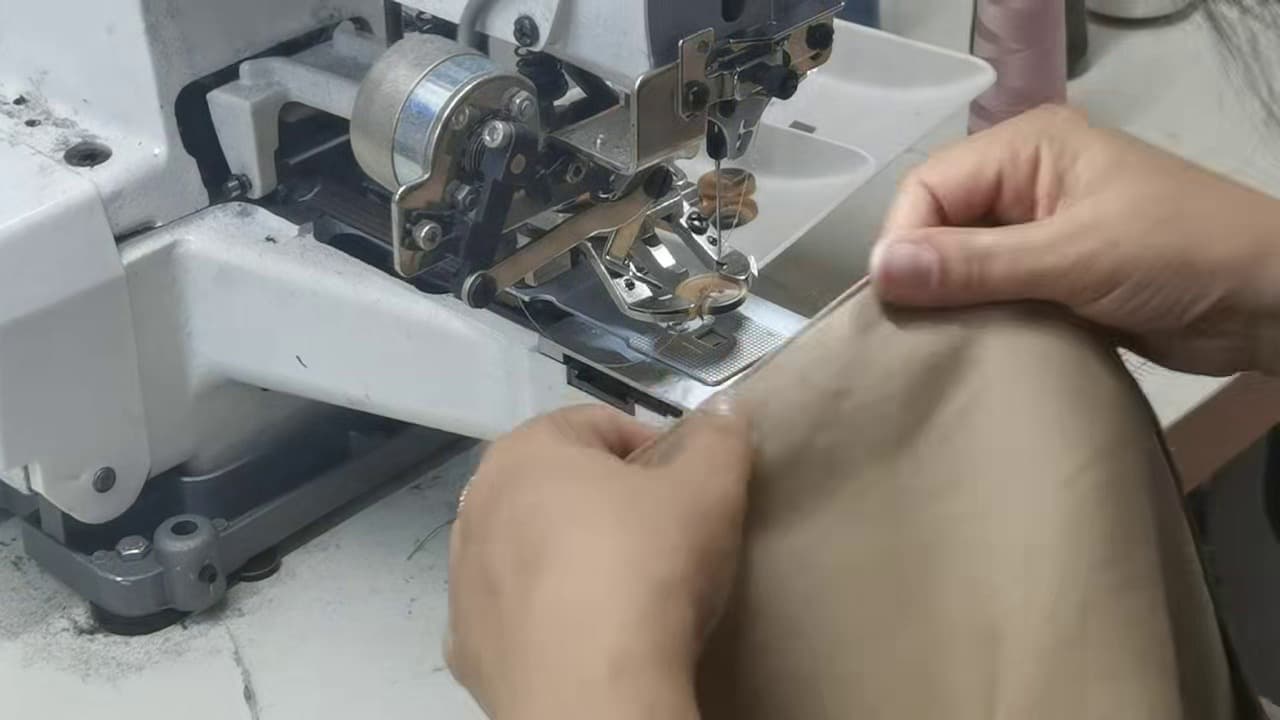
Screen printing, embroidery, puff print, applique, and wash effects all create different setup costs and approval steps.
- Complex artwork can increase sample and bulk cost
- Strike-offs reduce risk before bulk
- Placement standards should be written into QC
05Small batch strategy is about focus
Low MOQ works best when the launch has a tight style count, controlled colors, available materials, and a clear reorder plan.
- Reduce color count first
- Keep size range realistic
- Pick materials that can be reordered
06Buyer decision path and RFQ fields
A useful guide should help the buyer decide what to do next. Use the decision path below to turn reading into a clear factory conversation.
- Compare whether you need sampling, costing, fabric sourcing, private label setup, or bulk production first
- Decide which variables must be locked before quote comparison: MOQ, GSM, artwork, labels, packaging, and timeline
- Prepare RFQ fields before contacting the factory: style, color count, size range, decoration, label package, and delivery country
- Use the approved sample as the production standard before bulk cutting, decoration setup, and packing
07What makes this different from a standard private label packaging explanation
This is different from standard industry explanation because it connects the search question to Meiting's real factory variables instead of repeating a definition. Factory rule: packaging is not only a design item; it must match garment folding, size ratio, barcode position, carton marks, warehouse receiving rules, and the final packing line workflow. MOQ logic: changes because labels, hangtags, woven patches, polybags, and cartons can each have separate supplier minimums even when the garment MOQ is 150 pcs per style/color. Cost structure: is driven by label mold, hangtag paper, string, polybag thickness, sticker or barcode printing, carton size, packing labor, and whether each size needs a different SKU or barcode. Production risk: comes from wrong care-label language, mismatched barcode files, polybag size errors, carton marks that fail warehouse receiving, or approving garment samples before label artwork is locked. Region/export difference: matters because US and European buyers may use different care-label language, barcode formats, carton mark rules, and receiving warehouse requirements.
- Buyer stage: this is for brand founders moving from plain samples into retail-ready private label orders, not for buyers only comparing garment unit price.
- Decision logic: compare the factory route, choose the setup that matches the buyer stage, and check the highest production risk before sample approval.
- RFQ fields that change by product: label size, hangtag size, polybag size, barcode file, carton marks, folding method, size ratio, delivery country, warehouse receiving rule.
- Action path: send the product reference, target quantity by style/color, size range, artwork file, label or packaging plan, delivery country, and launch date before asking for a production quote.
- Factory proof to request: sample photos, similar product case, process video, decoration test, QC checklist, packing method, and carton mark example where relevant.
08Decision path for this buying situation
Decision Stage: Execution. Decision Lens: Risk Lens. This topic enters the purchase path because the buyer is moving from garment samples to retail-ready product and needs label, packaging, barcode, carton, and warehouse requirements aligned before production. The goal is not to make the article sound different; the goal is to lower the buyer's decision cost before the next RFQ step.
- Decision blockers: the buyer thinks garment MOQ and packaging MOQ are the same when labels, hangtags, polybags, and cartons may each have separate minimums; the buyer has not prepared barcode, care-label language, carton marks, or warehouse receiving rules; the buyer worries packaging mistakes will delay shipment after garments are already finished.
- Decision nodes: decide which packaging items are required for the first run and which can wait for reorder; confirm whether the factory or a separate packaging supplier controls each item and MOQ; lock label artwork, barcode files, polybag size, carton marks, and packing method before sample approval.
- Decision output: send label artwork, hangtag size, polybag size, barcode file, carton marks, folding method, quantity by size, delivery country, and warehouse receiving rules.
- Commercial validation: Can enter RFQ: yes, because packaging decisions are converted into exact quote fields | Reduces uncertainty: yes, because it separates garment MOQ from label and packing supplier minimums | Supports supplier selection: yes, because it shows whether the factory can manage retail-ready packing | Clear next action: request a packaging MOQ and packing-line quote with garment production.
- Next RFQ action: use the CTA on this page to send quantity by style/color, size range, fabric or GSM target, artwork, decoration method, label or packaging scope, delivery country, and launch date.
09Evidence Graph for this recommendation
Evidence Graph: this article separates generic statements from evidence that can support a buying decision. Information Gain Validation: generic SERP answers explain private labels; this guide adds packaging-specific MOQ, barcode, carton, packing-line, and warehouse receiving evidence.
- Evidence tier: SERP gap - most public articles explain the topic, but they rarely connect it to quote scope, sample approval, and supplier selection.
- Evidence tier: RFQ - the buyer must provide quantity by style/color, size range, fabric or GSM target, artwork, decoration method, label or packaging scope, delivery country, and launch date.
- Evidence tier: factory SOP - Meiting's internal route starts with sample brief, material confirmation, decoration setup, QC checkpoints, packing method, and export handoff.
- Evidence tier: QC - the recommendation is only useful if it can be checked through measurements, fabric shade, decoration placement, labels, packing, carton marks, and shipment readiness.
- Information Gain Validation: generic SERP answers explain private labels; this guide adds packaging-specific MOQ, barcode, carton, packing-line, and warehouse receiving evidence.
010Decision Simulation: choose the route before RFQ
Buyer Situation: moving from a garment sample into retail-ready private label production with labels, hangtags, polybags, carton marks, and barcode needs. Buyer Constraints: garment MOQ and packaging MOQ can come from different suppliers and different setup rules; wrong label language, barcode files, carton marks, or polybag size can delay shipment after garments are finished; retail-ready packing requires factory, packaging supplier, and receiving warehouse assumptions to match.
- Buyer Situation: moving from a garment sample into retail-ready private label production with labels, hangtags, polybags, carton marks, and barcode needs.
- Buyer Constraints: garment MOQ and packaging MOQ can come from different suppliers and different setup rules; wrong label language, barcode files, carton marks, or polybag size can delay shipment after garments are finished; retail-ready packing requires factory, packaging supplier, and receiving warehouse assumptions to match.
- Option A: add packaging after garments are finished. Pros: keeps the first garment quote simple. Cons: high risk of late barcode, carton, folding, or packing changes.
- Option B: quote garment and packaging together. Pros: clear landed cost and fewer shipment surprises. Cons: requires label artwork and packaging decisions earlier.
- Option C: start with basic care label and polybag, then upgrade on reorder. Pros: better for small first runs with limited budget. Cons: less polished brand presentation for the first launch.
- Factory Recommendation: choose Option B if retail launch accuracy matters; choose Option C only if budget is tighter than brand presentation.
- If I were you, I would choose Option B if retail launch accuracy matters; choose Option C only if budget is tighter than brand presentation and then send one RFQ that tests this decision with real factory answers.
- Next RFQ: send quantity by style/color, size range, fabric or GSM target, artwork, decoration method, label or packaging scope, delivery country, launch date, and the specific proof you need before sample approval.
- Post-Publish Validation: track whether readers click private label services and submit label, barcode, carton mark, or packing requirements in RFQ.
011Editorial quality control before publishing
This guide is not a directly published AI draft. AI can help organize research, but Meiting treats every technical blog as a human-reviewed buyer decision page: factory facts, sample experience, quote logic, and post-publish ranking signals are checked before the content is treated as useful.
- Human review: production, sampling, fabric, decoration, MOQ, QC, packing, and export claims are checked against Meiting's factory workflow before publishing.
- Factory data: the guide uses real operating benchmarks such as 150 pcs MOQ planning, 10-18 working day sampling windows, product sample references, QC checks, and packing or shipment steps where relevant.
- Sample/case inputs: examples are tied back to product samples, factory process videos, buyer RFQ questions, or case-study style decisions instead of generic wording.
- AI draft risk control: content is rewritten for buyer intent, verified terminology, and information gain so it is not a thin AI summary with no original data source.
- Post-publish validation: Search Console impressions, CTR, average position, guide-to-service clicks, and RFQ-assisted paths are monitored after indexing.