Meiting Garments logo mark

Manufacturing Guide · 12 min read

Chinese Garment Manufacturers: A Buyer’s Factory Selection Guide

Quick Answer

choose a Chinese garment manufacturer by matching the factory's product specialization, development support, material route, MOQ, sample controls, private label scope, and QC process to your exact garment. Do not shortlist a supplier only because it is in China, advertises a low price, or shows a large workshop. First confirm who owns each decision from tech pack review through bulk inspection, then request evidence for the route you will actually buy.

factoryBy EdmondBusiness & Production CoordinationTechnical review: Meiting Sample Development, Production & QC TeamPublished · Updated Editorial policy
China Factory Selection GuideFor buyers building a China factory shortlist

Planning Facts

Factory route
Match product specialization before comparing factory size.
MOQ check
Separate garment, fabric, decoration, label, and packaging minimums.
Deposit gate
Approve scope, sample route, responsibilities, and QC before bulk payment.

These are planning ranges, not universal guarantees. Actual timing and feasibility depend on material sourcing, decoration, wash, sample revision, quantity, and the approved production route.

Key Decision Factors

Use the conditions below to choose a production route and identify what must be approved before the next commitment.

ConditionRecommended RouteRiskWhat Buyer Must Approve
Custom fit, fabric, or constructionCut-and-sew factory routeA blank decorator cannot control the whole garmentPattern, measurements, fabric, and sample stages
Very small graphic test on stock garmentsBlank-decoration routeLimited control over fit and fabricBlank specification and decoration strike-off
Supplier uses specialist partnersNamed responsibility mapQuality gaps between subcontracted stagesWho owns wash, decoration, QC, and defect resolution
01

Start with product specialization, not factory size

Chinese garment manufacturers are not interchangeable. A factory built around fleece and jersey may be a strong route for heavyweight hoodies and T-shirts but a poor fit for tailored suiting, seamless activewear, or technical outerwear. Start by matching the supplier's repeatable product route to your first style.

  • Ask which garment categories the sample room and production lines handle repeatedly
  • Request examples that match your fabric, fit, construction, wash, or decoration route
  • Confirm which operations are completed by the accountable team and which use specialist partners
  • Treat a broad catalog as a question to investigate, not automatic proof of capability
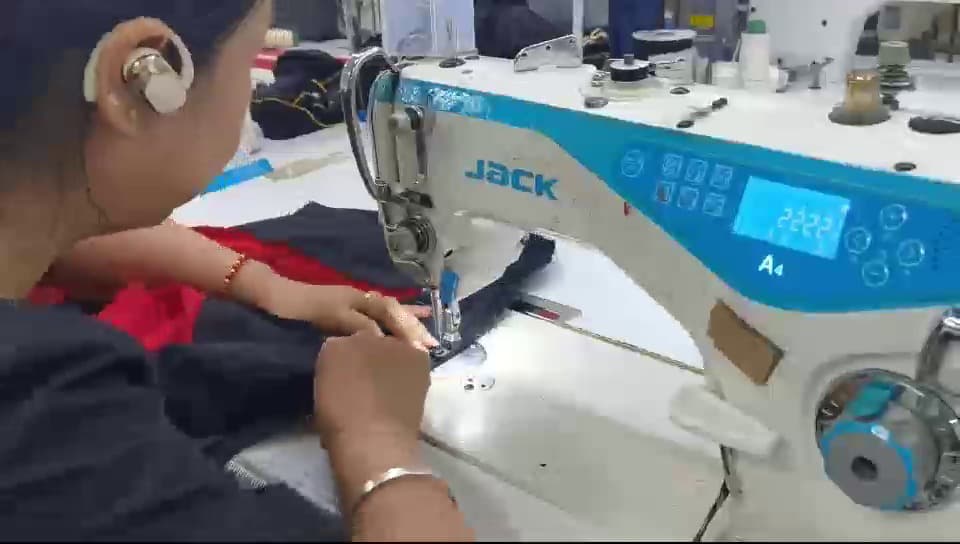
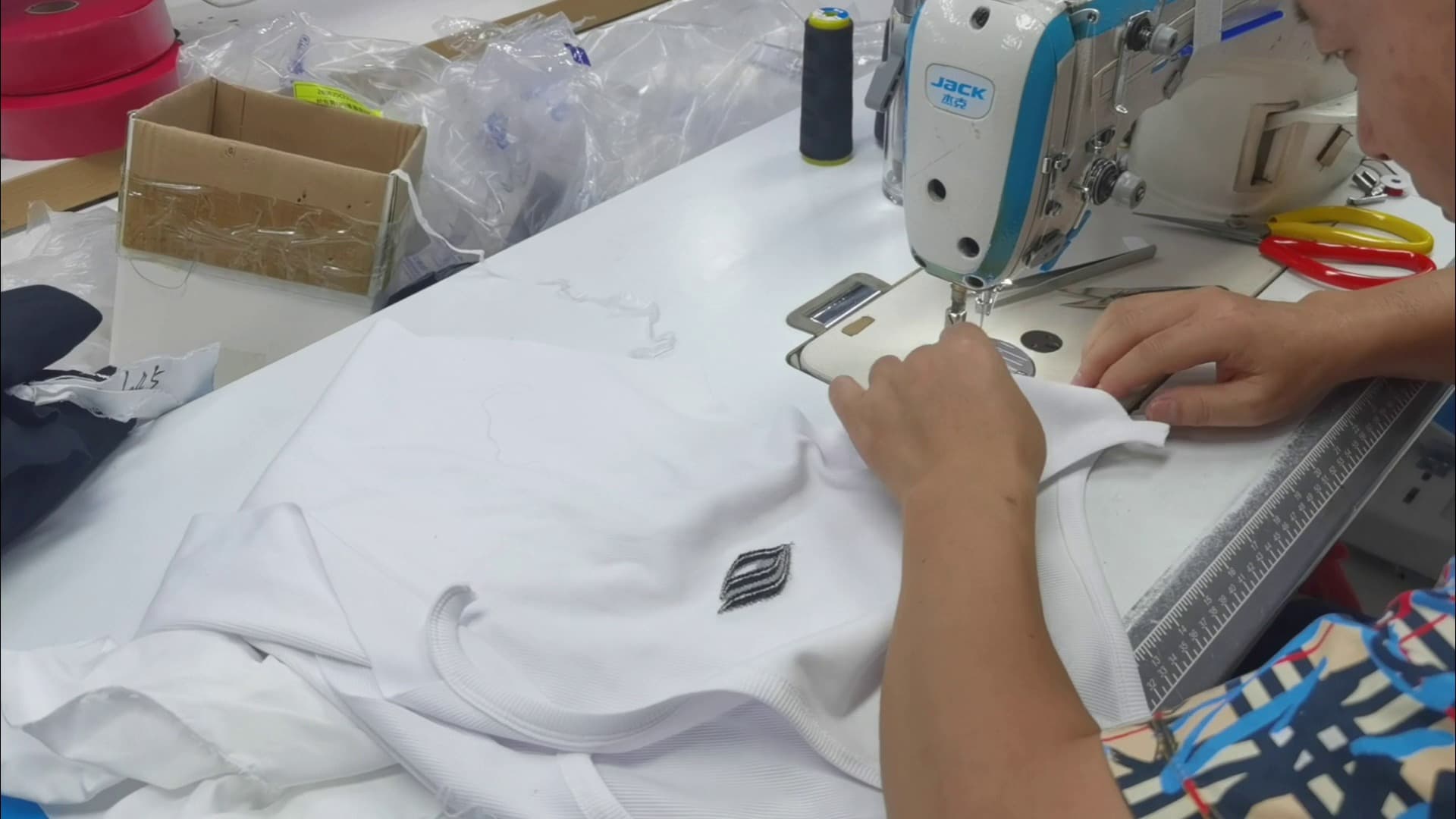
Close view of an operator working at an industrial sewing machine at Meiting Garments
A production floor should be evaluated against the product route being quoted. Frame from Meiting's own factory floor video — not a stock photo.
02

Factory vs sourcing partner: identify who owns the result

A factory, trading company, and sourcing partner can each be useful, but the buyer needs to know who reviews the brief, selects the production route, approves subcontractors, manages QC, and resolves defects. Direct production access matters most when the product depends on fit, fabric, wash, decoration, or fast technical decisions.

  • Ask for the legal company name, business address, production address, and quotation entity
  • Confirm who employs or manages the sample, production, and QC teams
  • Request a live or recorded walkthrough relevant to the claimed production process
  • Put subcontracted washing, printing, embroidery, testing, or packing responsibility in writing
03

Separate cut-and-sew manufacturing from blank decoration

Cut-and-sew production creates the garment from a pattern, fabric, trims, and construction specification. Blank decoration starts from an existing garment and adds print, embroidery, or labels. Both routes can be valid, but they offer different control over fit, fabric, sizing, and reorder consistency. Buyers who need a custom silhouette should evaluate the cut-and-sew clothing manufacturer route rather than compare it with a blank price.

  • Choose cut-and-sew when pattern, measurements, fabric, construction, or wash must be customized
  • Choose blanks when speed and very small graphic tests matter more than garment-level control
  • Ask whether the quotation starts from stock inventory or a new production specification
  • Compare like-for-like scope before using unit price as the deciding factor
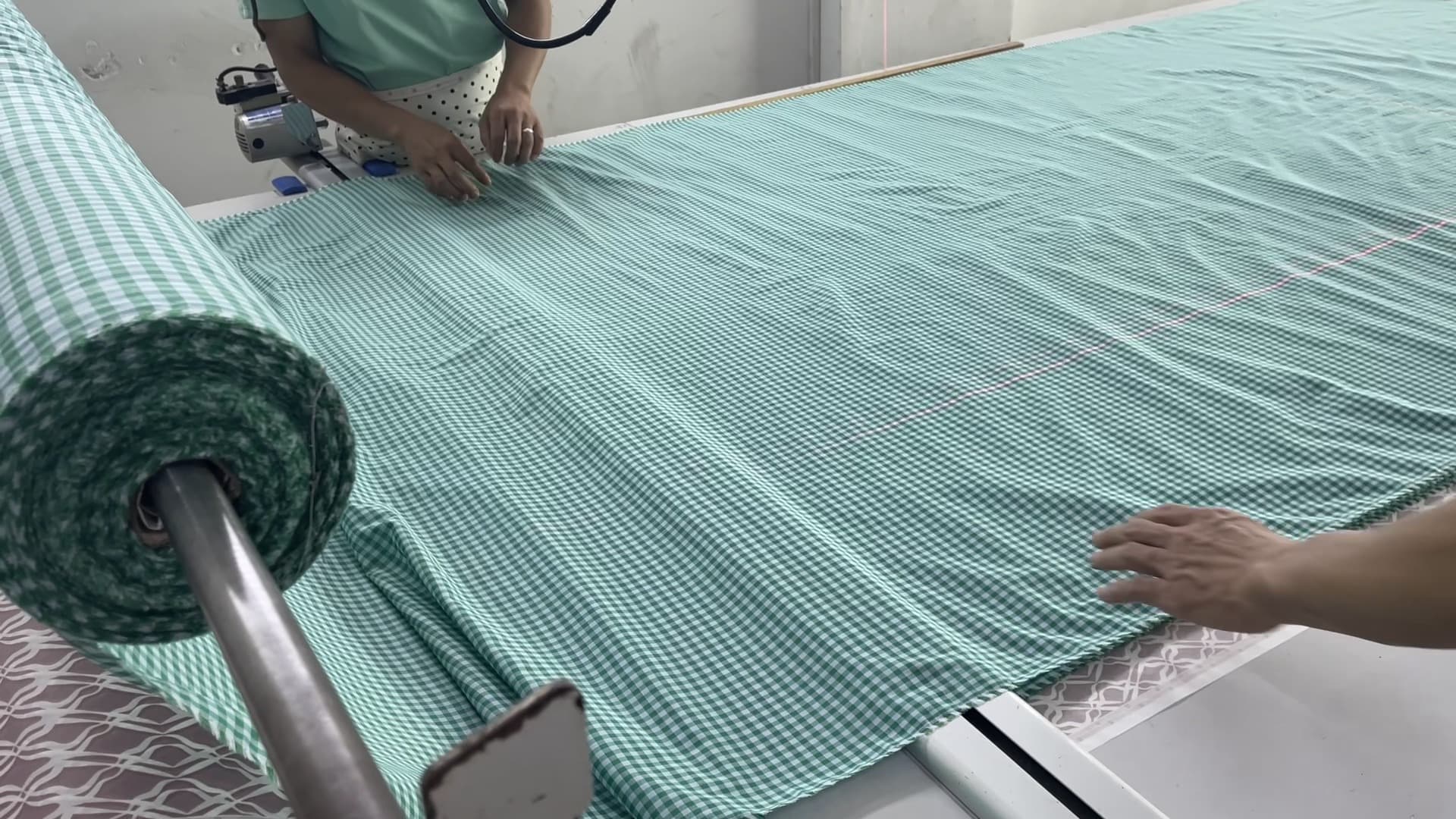
Fabric roll being spread on the cutting table at Meiting Garments before bulk cutting
Cutting is one of the operations that separates a cut-and-sew route from blank decoration. Frame from Meiting's own factory floor video — not a stock photo.
04

Read MOQ as a production constraint map

MOQ can come from the garment line, fabric mill, dye lot, wash house, print setup, embroidery setup, trims, labels, or packaging. One advertised number does not prove every component can run at that quantity. A focused first run may use available materials and a simpler brand package, while custom fabric and hardware can require a different route.

  • Request MOQ by style, color, fabric, decoration, label, and packaging item
  • Ask which material is in stock and which requires knitting, dyeing, coating, or testing
  • Separate sample quantity from commercial bulk MOQ
  • Use the startup clothing manufacturer page to compare 150, 300, and 500 pcs planning trade-offs
05

Use sampling to convert claims into an approval standard

A sample is useful when it closes measurable decisions. Review fit, fabric, shrinkage, construction, decoration placement, labels, and packing separately, then approve a pre-production sample that the bulk and QC teams can use as a shared standard. A good-looking photo is not a replacement for written measurements and approval comments.

  • Start from a tech pack, physical sample, sketches, or reference photos with keep/change notes
  • Approve fit and material before treating artwork placement as final
  • Use strike-offs or treated garment samples for print, embroidery, or wash decisions
  • Keep versioned comments and identify every item that remains open before bulk cutting
06

Verify private label scope as part of the garment

Private label capability is more than adding a neck logo. Confirm care content, size labels, hangtags, barcode data, polybags, carton marks, placement, supplier minimums, and the inspection method for each item. The garment and brand package should be approved together when they affect sewing, packing, compliance, or warehouse receiving.

  • Send editable logo and artwork files with dimensions and placement
  • Confirm whether the factory coordinates label and packaging suppliers or only attaches supplied items
  • Approve label, hangtag, sticker, polybag, and carton layouts before bulk packing
  • Use the private label clothing supplier page for the complete brand-package route
07

Define QC checkpoints before paying a production deposit

QC is easier to evaluate when the standard is written before production. Ask what is checked at material receipt, cutting, sewing, decoration, finishing, final inspection, and packing. The supplier should be able to explain tolerances, sample reference, defect handling, and what evidence the buyer receives before shipment release.

  • Material: GSM, composition documentation, shade, shrinkage, defects, and lot consistency
  • Construction: measurements, seam type, stitch quality, symmetry, and stress points
  • Decoration: color, scale, placement, registration, density, handfeel, and wash behavior
  • Packing: labels, barcode, folding, size ratio, polybag, carton marks, and shipment count
Finished garment being pressed at the finishing station at Meiting Garments
Finishing and inspection evidence should connect to the approved sample standard. Frame from Meiting's own factory floor video — not a stock photo.
08

Factory selection decision table

Use the table below to decide whether a supplier is ready for sampling, needs more evidence, or should leave the shortlist. A website statement can start a question, but the decision should follow written scope and project-relevant proof.

  • Product match | Proceed when the supplier shows a relevant sample and explains the production route | Pause when only unrelated catalog images are available
  • Responsibility | Proceed when sample, material, production, subcontracting, and QC ownership are named | Pause when responsibility changes between contacts
  • MOQ | Proceed when minimums are split by garment, fabric, decoration, and brand assets | Pause when one number is promised before brief review
  • Sample | Proceed when revision steps and PP approval are documented | Pause when bulk is requested from an unapproved photo sample
  • QC | Proceed when checks, tolerances, defect response, and release evidence are written | Pause when quality is described only as high
  • Commercial terms | Proceed when price scope, payment stage, delivery basis, and exclusions are clear | Pause when the deposit is requested before scope alignment
09

Compare China and US production by project trade-offs

China and US manufacturing should not be compared as one universal winner. A US route can help with local communication, domestic labeling, or very small nearby development. A China route can be useful when the project needs coordinated fabric, trims, wash, decoration, private label details, and a scalable custom run. Freight, duties, timeline, compliance, and communication ownership still need project-specific review.

  • Compare landed scope rather than factory unit price alone
  • Include sampling shipments, bulk freight, duties, inspection, and delivery risk
  • Choose the route that supports the intended product and reorder plan
  • Do not use country as a substitute for supplier-level verification
010

Send an RFQ that exposes missing decisions

A useful RFQ gives Chinese garment manufacturers enough information to identify material, MOQ, sampling, private label, QC, and delivery constraints before quoting. If two suppliers quote different scopes, the buyer cannot compare their prices fairly.

  • Product type, tech pack or references, target fit, measurements, and size range
  • Fabric construction, composition, GSM, color, handfeel, wash, and testing needs
  • Artwork, decoration method, dimensions, placement, labels, and packaging
  • Quantity by style/color, destination country, target date, and required delivery basis
  • Evidence requested before deposit and approval required before bulk production

Factory Verification Checklist

  • task_altLegal company, quotation entity, and production address
  • task_altProduct specialization and project-relevant sample evidence
  • task_altFactory, sourcing partner, and subcontractor responsibility map
  • task_altCut-and-sew or blank-decoration production route
  • task_altMOQ by garment, fabric, color, decoration, labels, and packaging
  • task_altSample stages, revision method, PP approval, and retained standard
  • task_altFabric, trim, wash, decoration, and private label confirmation
  • task_altQC checkpoints, tolerances, defect handling, and release evidence
  • task_altPayment stages, Incoterm or delivery basis, exclusions, and shipment plan
  • task_altRFQ fields complete enough for like-for-like quote comparison

Shortlisting Risks

  • errorChoosing the largest-looking Chinese factory without checking category fit
  • errorAssuming a trading or sourcing model is bad without identifying who owns technical decisions and QC
  • errorComparing a blank-decoration quote with a custom cut-and-sew quotation
  • errorTreating the garment MOQ as proof that custom fabric, labels, and packaging use the same minimum
  • errorPaying a bulk deposit before the sample route and commercial scope are written
  • errorUsing vague quality language as a substitute for measurable tolerances and inspection evidence

What to Include in a China Factory RFQ

  • Product category and target market
  • Tech pack, reference sample, or sketches
  • Quantity by style, color, and size
  • Fabric, trim, and decoration requirements
  • Sample and approval expectations
  • Delivery country and target date
Send these details in your RFQ

Factory Evidence

This guide uses Meiting factory-process images where the visible operation supports the production point being discussed.

  • A production floor should be evaluated against the product route being quoted. Frame from Meiting's own factory floor video — not a stock photo.
  • Cutting is one of the operations that separates a cut-and-sew route from blank decoration. Frame from Meiting's own factory floor video — not a stock photo.
  • Finishing and inspection evidence should connect to the approved sample standard. Frame from Meiting's own factory floor video — not a stock photo.
Review Meiting factory process videos

Need a Factory Route Checked?

Send the product brief and the factory assumptions you are comparing. We can identify which production questions need answers before the quotes are comparable.

Request a Factory Route Review