Meiting Garments logo mark

Manufacturing Guide · 14 min read

Apparel Sourcing Agent vs Direct Factory | Buyer Guide

Quick Answer

A sourcing agent and a direct factory do not simply offer two prices for the same service. They assign product development, supplier coordination, quality control and problem ownership differently. The right route is the one your team can operate without leaving critical responsibilities unassigned.

factoryBy EdmondBusiness & Production CoordinationTechnical review: Meiting Sample Development, Production & QC TeamPublished · Updated Editorial policy
Sourcing Route ComparisonBuilt for apparel buyers preparing a production brief

Which sourcing route fits the way your team works?

Match the sourcing route to the work your team can control. The route name matters less than the written responsibility and evidence behind it.

ConditionRecommended RouteRiskWhat Buyer Must Approve
Direct clothing factoryFocused category, stable specifications, repeatable volume and an experienced buyer teamThe brand must actively manage the brief, revisions, approvals and any outside suppliersName the contracting party, specification owner, approval owner, QC scope, and handoff record before starting the first project.
Independent sourcing agentMultiple factories, categories or regions and a lean team that needs local coordinationConfirm factory visibility, fee structure, contract ownership, QC scope and access to recordsName the contracting party, specification owner, approval owner, QC scope, and handoff record before starting the first project.
Manufacturer-led sourcing partnerOne accountable garment-production route that also needs coordinated fabric, trims, decoration and packingConfirm which work is in-house, which work uses outside suppliers and who is accountable at every handoffName the contracting party, specification owner, approval owner, QC scope, and handoff record before starting the first project.
01

When this comparison is useful

Use this guide before contacting suppliers, when a first quote looks attractive but it is still unclear who will source fabric, coordinate trims, consolidate sample comments, define inspection criteria or handle export handoff. It is also useful when a brand is moving from one stable product into a more complex collection.

  • You are comparing an agent fee with a factory quote but not the work included in each route.
  • One garment needs outside fabric, trim, wash, decoration or packaging suppliers.
  • Your team does not yet know who owns the current specification, approvals and QC exceptions.
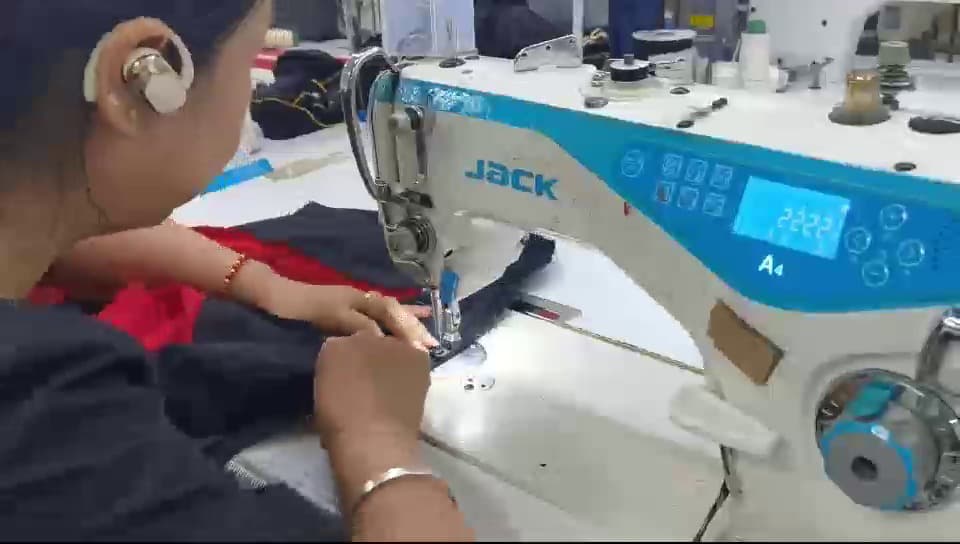
Close view of an operator working at an industrial sewing machine at Meiting Garments
Meiting's sewing floor shows the production party behind a direct manufacturer route; a buyer still needs written responsibility for specifications, approvals, and outside suppliers. Frame from Meiting's own factory floor video — not a stock photo.
02

Key takeaways

Use these conclusions to keep the decision connected to responsibility, evidence, and the next production approval.

  • Choose a direct factory when your category is focused and your team can own specifications, approvals and supplier communication.
  • Choose a sourcing agent when multi-supplier coordination and local execution support are worth the added layer, then verify transparency and scope.
  • Compare responsibility, evidence and total operating workload before comparing one unit price or commission percentage.
03

A six-step sourcing-route review

Review the product scope, production parties, responsibility, evidence, workload, and first-project controls in this order.

  • 01 — Define the product scope: List categories, styles, materials, processes, quantities, destination and launch timing before comparing routes.
  • 02 — Map every production party: Identify garment production, fabric, trims, decoration, wash, packaging, inspection and freight participants.
  • 03 — Assign responsibility: Name who requests quotes, controls the spec, follows samples, approves changes, checks bulk and reports exceptions.
  • 04 — Request evidence: Ask for relevant product proof, sample records, material references, QC outputs and clear commercial boundaries.
  • 05 — Compare total workload: Compare included work, exclusions, communication burden and correction risk alongside unit price and fees.
  • 06 — Run a controlled first project: Use one traceable brief, written milestones and a post-project review before expanding the relationship.
04

Compare the work behind the quote

Compare the operating work included in each route before comparing the visible quote or fee.

  • Factory relationship: Direct-factory route — Buyer normally communicates with the production party; Agent or sourcing-partner route — Ask whether the buyer can identify and communicate with the actual production party.
  • Specification control: Direct-factory route — Buyer sends and maintains the current file and approvals; Agent or sourcing-partner route — Confirm who maintains the master file and returns approved revisions to the buyer.
  • Fabric and trims: Direct-factory route — Factory may coordinate known suppliers within its category; Agent or sourcing-partner route — Partner may compare a wider supplier set; require swatches, terms and applicability to be documented.
  • Sample follow-up: Direct-factory route — Buyer and factory close comments directly; Agent or sourcing-partner route — Partner can consolidate communication, but the buyer must still approve measurable changes.
  • Quality control: Direct-factory route — Buyer defines pass/fail criteria and agrees factory checkpoints; Agent or sourcing-partner route — Partner may coordinate inspection; the buyer still owns the approved quality standard.
  • Commercial comparison: Direct-factory route — Factory quote may exclude buyer-side management work; Agent or sourcing-partner route — Fee or margin may cover coordination; compare the exact deliverables, not the label.
  • Export handoff: Direct-factory route — Responsibility depends on the agreed commercial terms; Agent or sourcing-partner route — Confirm documents, packing, forwarder handoff and exception reporting in writing.
05

This is an operating-model decision, not only a price decision

A direct factory relationship removes one formal intermediary, but it does not remove product-management work. Someone still has to define the product, maintain the current tech pack, confirm material and trim options, consolidate sample comments, approve changes, define quality criteria and decide what happens when production moves off plan. A sourcing agent adds a coordination layer, but the value of that layer depends on what it actually does. Introductions alone are different from factory selection, material sourcing, sample follow-up, inline issue handling, final inspection coordination and export documentation. Compare the responsibilities that move with the fee, not the job title printed on a website.

    06

    When going directly to a clothing factory works well

    The direct route is strongest when the factory repeatedly produces the category you need and your brand can send a controlled brief. A focused hoodie or T-shirt program is easier to manage directly than a collection spread across knitwear, denim, outerwear, special washes and multiple packaging suppliers. Direct communication can shorten clarification loops because the buyer speaks with the production team. That advantage disappears if the brief is incomplete, approvals live in scattered messages or the brand assumes the factory will make commercial and design decisions on its behalf.

    • Your team can maintain one current tech pack, measurement chart and comment record.
    • The factory can show relevant category and construction evidence.
    • Material and process needs fit the factory's practical supplier route.
    • The buyer can review samples and answer production questions without long delays.
    07

    When an apparel sourcing agent can earn the extra layer

    An agent can be useful when a lean brand needs local supplier discovery, communication, visits or coordination across several factories. The model can also fit a collection that cannot be produced responsibly through one category specialist. The risk is opacity. A buyer should know which legal party is quoting and invoicing, which factory will make the garment, how the agent is paid, whether supplier access continues if the relationship ends, who owns the files and samples, and what inspection work is actually included. A promise to handle everything is not a responsibility map.

      08

      Do not confuse a sourcing agent with a trading company

      The labels are used inconsistently, so judge the commercial structure rather than the label. An agent generally acts on the buyer's behalf for a disclosed service or fee. A trading company may buy from a factory and resell to the buyer under its own commercial terms. A manufacturer may also coordinate outside mills, trim suppliers, wash plants or decoration specialists while remaining responsible for the garment program. Ask who signs the contract, who receives payment, who holds the factory relationship and who is responsible for a defect or late material. Those answers reveal the model more reliably than the About page does.

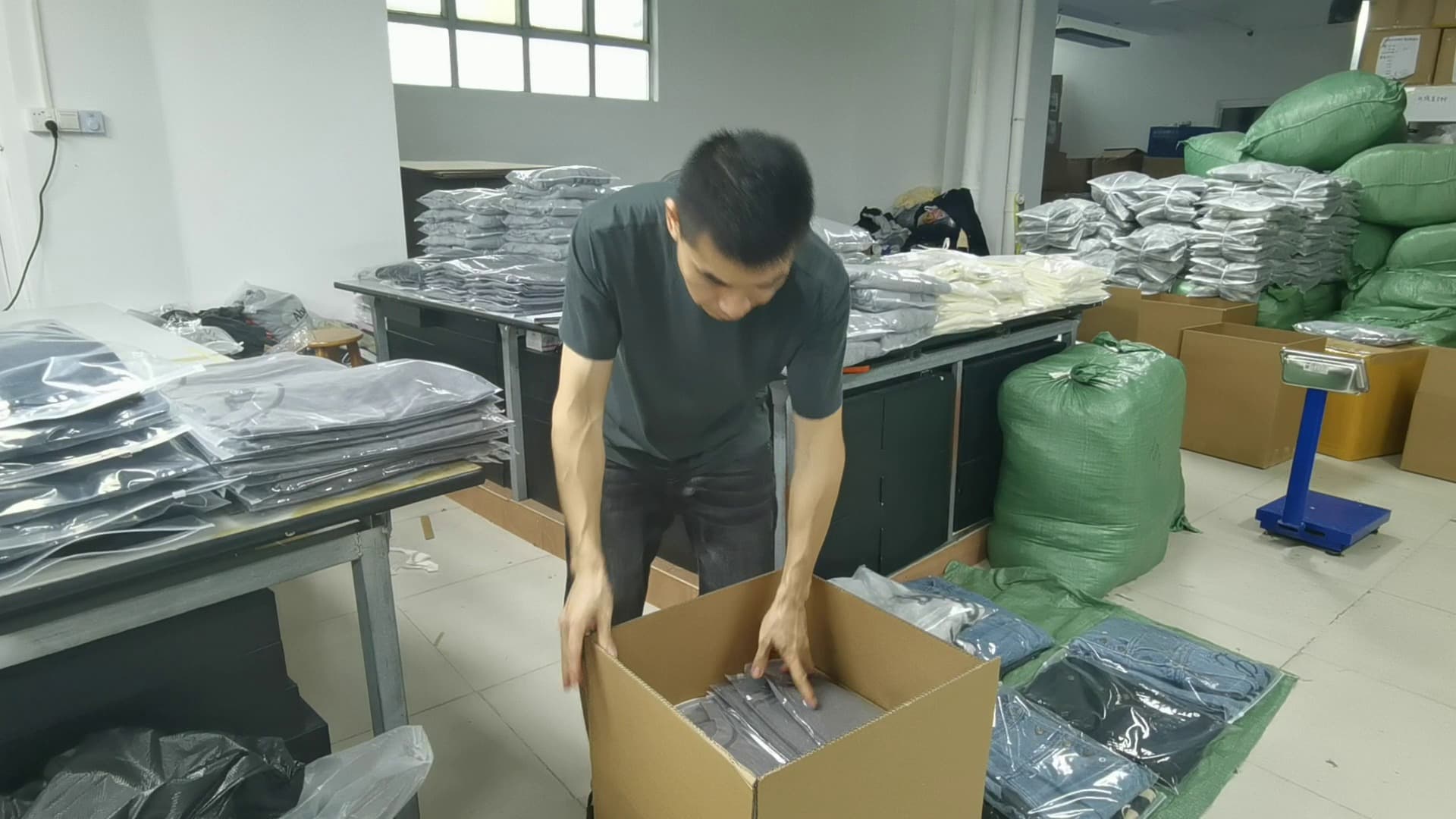
        Worker packing polybagged garments into an export carton at Meiting Garments warehouse
        Packing and export handoff remain named responsibilities whether the buyer works directly with a factory or through a sourcing partner. Frame from Meiting's own factory floor video — not a stock photo.
        09

        The manufacturer-led sourcing route

        Some apparel projects need a hybrid route: the garment manufacturer remains the accountable production owner while coordinating fabric, trims, labels, decoration, wash, packaging and export handoff. This can reduce handoff gaps when those inputs must work with the same pattern, sample and bulk standard. It is not automatically better than an independent agent or direct sourcing. The buyer still needs to know what is produced by the manufacturer, what is supplied by outside partners, which supplier-specific minimums apply, which approvals are required and where the manufacturer's responsibility ends.

          010

          Seven questions that expose the real sourcing scope

          Ask the same questions of every route so the answers are comparable. Require names, documents, decision owners and handoff points instead of broad assurances.

          • Who is the contracting and invoicing party?
          • Can the buyer identify the factory and the outside suppliers that matter to the product?
          • Who owns and updates the master tech pack, BOM, measurements and revision record?
          • Who requests, labels and records fabric, trim, color and decoration approvals?
          • Who consolidates sample comments and confirms that changes reached the current file?
          • Who defines inspection criteria, performs or coordinates checks and reports exceptions?
          • Who controls packing records, export documents, forwarder handoff and final shipment release?
          011

          Compare total execution cost without inventing a universal percentage

          A factory unit quote, an agent commission and a bundled sourcing price are not directly comparable until the included work is listed. One route may exclude technical development, swatches, courier charges, inspection, rework, packing setup or export coordination. Another may bundle some of that work but limit supplier transparency. Build a simple cost-and-work ledger: quoted product cost, development charges, material and trim setup, inspection, travel or local support, logistics handoff, internal staff time and the cost of correcting an assumption. The cheapest visible line can still be the most expensive operating route for an unprepared team.

            012

            Ask for evidence that matches your product

            A hoodie case does not prove denim capability, and a supplier list does not prove that a partner can control samples or bulk. Request evidence close to the proposed category, material, construction, decoration and order route. Useful evidence can include current product references, a sample comment trail, material or trim approval records, an example QC report, packing records, factory or process footage and a written explanation of what the evidence does not prove. Verify the legal company, contact details and commercial scope separately.

              013

              What to send before Meiting reviews a sourcing route

              Send the product category, tech pack or references, quantity by style and color, target market, fabric and trim direction, target cost range, decoration, label and packaging needs, destination and delivery window. Identify which decisions are fixed and which alternatives can be reviewed. Meiting can then map material, trim, sample, supplier, QC, packing and export-handoff questions for the reviewed program. Availability, supplier minimums, cost, timing and the final production route remain project-specific until the relevant inputs are confirmed.

                014

                Frequently Asked Questions

                Use these answers to keep the comparison connected to a written project scope and approval record.

                • Is working directly with a clothing factory always cheaper? Not necessarily. A direct quote may remove an agent fee but still require the buyer to manage technical files, supplier communication, samples, inspections and exceptions. Compare the work included and the internal workload before deciding.
                • What does an apparel sourcing agent do? Scope varies. It can include factory search, supplier vetting, price and term coordination, material sourcing, sampling follow-up, QC coordination and logistics handoff. Ask for a written responsibility map rather than assuming all services are included.
                • When should a startup brand use a sourcing agent? An agent can fit a lean team that needs local coordination across multiple categories or suppliers. A focused startup program may also work directly with a suitable manufacturer if the brand can provide decisions and approve samples promptly.
                • Can a clothing manufacturer also act as a sourcing partner? Yes. A manufacturer may coordinate fabric mills, trim suppliers, decoration, wash, packaging and export partners around the garment program. Confirm which operations are in-house, which are external and who remains accountable for each handoff.
                • Who owns quality control when an agent is involved? An agent can coordinate or perform inspection, but the buyer must still approve the product standard and pass/fail criteria. The contract should state who reports, corrects and authorizes exceptions.
                • How can a buyer verify a direct factory? Check the legal entity, address, relevant production evidence, product-category fit, sample process, commercial documents and who will make the goods. One certificate or factory video is not a complete verification by itself.

                Approval Checklist

                • task_altList every style, color, size range and target quantity.
                • task_altIdentify garment, fabric, trim, decoration, wash and packing parties.
                • task_altConfirm the contracting and invoicing entity.
                • task_altAssign one owner for the master specification and revision log.
                • task_altDefine who coordinates each sample and approval.
                • task_altWrite measurable QC criteria before inspection is discussed.
                • task_altRequest category-relevant product and process evidence.
                • task_altSeparate included work from optional or third-party charges.
                • task_altConfirm factory and supplier visibility requirements.
                • task_altDefine packing, document, freight and shipment-release responsibility.
                • task_altPilot the communication and approval workflow on a controlled project.
                • task_altReview the relationship after sampling and after the first bulk order.

                What Can Go Wrong

                • errorA factory, agent or trading company refuses to identify the contracting party.
                • errorThe buyer cannot confirm which facility will produce the category.
                • errorTech pack and sample revisions are kept only in chat messages.
                • errorInspection is promised without an approved pass/fail standard.
                • errorMaterial certificates or reports are shown without holder, scope or applicability.
                • errorThe quote does not separate inclusions, setup work, supplier minimums or logistics responsibility.
                • errorThe partner promises universal cost savings, lead time or quality without reviewing the project.

                What to Send the Manufacturer

                • Product type and reference
                • Quantity by style and color
                • Size range and target fit
                • Fabric, GSM, and handfeel
                • Artwork and decoration method
                • Labels and packaging
                • Destination country
                • Target launch or delivery date
                Send these details in your RFQ

                Factory Evidence

                This guide uses Meiting factory-process images where the visible operation supports the production point being discussed.

                • Meiting's sewing floor shows the production party behind a direct manufacturer route; a buyer still needs written responsibility for specifications, approvals, and outside suppliers. Frame from Meiting's own factory floor video — not a stock photo.
                • Packing and export handoff remain named responsibilities whether the buyer works directly with a factory or through a sourcing partner. Frame from Meiting's own factory floor video — not a stock photo.
                Review Meiting factory process videos

                Want us to review your project details?

                Send your tech pack, reference photos, quantity, target timeline, or current supplier problem. We will respond with a practical next step.

                Send RFQ