Meiting Garments logo mark

Tech Pack Tips · 15 min read

Tech Pack vs Reference Garment | Apparel Buyer Guide

Quick Answer

A tech pack and a reference garment solve different communication problems. The tech pack records measurable instructions and revisions; the reference garment communicates three-dimensional fit, handfeel and construction cues. A project can begin with either, but reliable bulk production needs the information from both routes to converge into one current written standard and an approved sample.

factoryBy EdmondBusiness & Production CoordinationTechnical review: Meiting Sample Development, Production & QC TeamPublished · Updated Editorial policy
Product Development InputsBuilt for apparel buyers preparing a production brief

Choose the starting input by what you need to prove next

Choose the starting input by what it communicates clearly, then record every missing production decision that must be resolved through sampling.

ConditionRecommended RouteRiskWhat Buyer Must Approve
Complete tech packMeasurable product instructions, BOM, artwork, labels, packaging and revisionsPhysical fit, handfeel, construction behavior and sample approvalRelease one dated specification, approved sample, closed comment record, and confirmed material, artwork, label, and packing references together.
Reference garmentSilhouette, proportion, handfeel, drape, finish and visible construction directionOwnership, intended changes, measurements, materials, grading, tolerances and repeatable written instructionsRelease one dated specification, approved sample, closed comment record, and confirmed material, artwork, label, and packing references together.
Sketch or reference imagesDesign direction, visible details and brand intentScale, back and internal views, construction, measurements, fabric, artwork files and approval criteriaRelease one dated specification, approved sample, closed comment record, and confirmed material, artwork, label, and packing references together.
Tech pack plus reference garmentObjective instructions plus tactile and three-dimensional directionConflicts between the two, custody, keep/change notes and the current approved versionRelease one dated specification, approved sample, closed comment record, and confirmed material, artwork, label, and packing references together.
01

When this guide is useful

Use this comparison when your brand has a sample, sketch or photo but no complete technical file, or when a detailed tech pack still fails to communicate the desired handfeel and silhouette. The goal is to decide what can start now, what remains an assumption and what must be approved before bulk.

  • A factory can see the look but cannot quote the construction or material route reliably.
  • The tech pack contains measurements but the desired drape, wash or handfeel remains unclear.
  • Sample comments are not being transferred into one current revision for production.
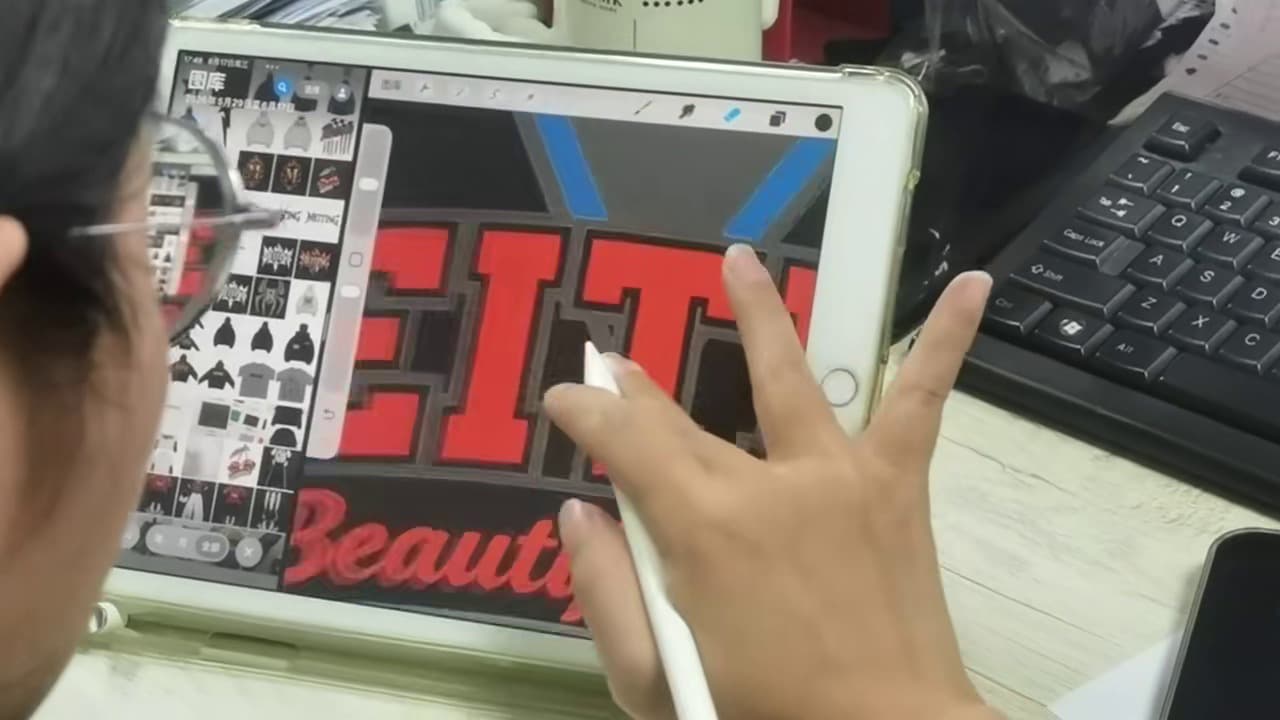
Artwork for a custom clothing order being prepared on an iPad at Meiting Garments
Artwork and visual references can start development, but dimensions, materials, placement, and revision status still need a controlled written record. Frame from Meiting's own factory floor video — not a stock photo.
02

Key takeaways

Use these conclusions to keep the decision connected to responsibility, evidence, and the next production approval.

  • Use a tech pack to control measurements, materials, construction, artwork, labels, packing and revisions.
  • Use a reference garment to communicate fit, proportion, drape, handfeel and details that are difficult to describe in a file.
  • Before bulk, freeze the latest written specification, approved physical sample and closed change record as one production reference set.
03

A six-step route from source material to bulk control

Register the available inputs, mark keep/change decisions, build the gap list, create the sample standard, close revisions, and freeze the bulk reference.

  • 01 — Register what you have: List the current tech pack, reference garment, images, measurements, artwork, swatches and earlier comments.
  • 02 — Mark keep and change: State which reference features are targets, which are only inspiration and what must be different in the new product.
  • 03 — Build the gap list: Separate quote-blocking decisions, sample-stage decisions and details that can remain open temporarily.
  • 04 — Create the sample standard: Convert approved decisions into a dated file version, then make and measure the physical sample.
  • 05 — Close revisions: Record every accepted change in the current tech pack or controlled specification instead of relying on chat history.
  • 06 — Freeze the bulk reference: Release the approved file set, PP sample, materials, artwork, labels and packing standard together.
04

What controls each production decision?

Separate the written production control from the physical evidence that confirms how the product should look and behave.

  • Fit and measurements: Best written control — POM chart, base-size targets, grade rules and tolerances; Best physical confirmation — Fit sample or approved reference on the intended body/block.
  • Fabric: Best written control — Composition, construction, GSM, stretch, finish and approved supplier reference; Best physical confirmation — Swatch or garment showing handfeel, drape and surface.
  • Construction: Best written control — Technical flats, seam and stitch callouts, panel details and BOM; Best physical confirmation — Sample showing actual assembly, bulk and internal finish.
  • Decoration: Best written control — Production artwork, dimensions, color and placement landmarks; Best physical confirmation — Strike-off or sample showing scale, handfeel and interaction with the fabric.
  • Labels and packing: Best written control — Artwork, content, dimensions, placement, SKU and packing instructions; Best physical confirmation — Approved label, hangtag, polybag and packed reference.
  • Bulk release: Best written control — Current spec revision, closed comments and approved exceptions; Best physical confirmation — Approved pre-production sample and material/decoration references.
05

The practical answer is not either-or

A tech pack is strongest at describing what can be named, measured, purchased and checked. A reference garment is strongest at showing what a flat file often struggles to communicate: how volume sits on the body, how a fabric falls, how a rib recovers, how a wash changes the surface and how construction feels in three dimensions. Neither one approves itself. A complete-looking tech pack can contain conflicting measurements, an unavailable material or outdated artwork. A reference garment can show an attractive result without revealing its composition, grade rules, internal construction or the changes your brand actually wants. The manufacturer must register the starting evidence and return open decisions instead of guessing.

    06

    What a tech pack controls well

    A usable apparel tech pack identifies the style and current revision, technical views, base size, points of measure, grade rules, tolerances, bill of materials, construction, colors, artwork, labels, packaging and sample comments. It gives costing, pattern, sampling and QC teams the same written reference. Its greatest value is change control. When the shoulder grows, the rib changes, artwork moves or a fabric alternative is approved, the current file should show that decision. A sample comment that never reaches the specification can disappear before bulk or reappear incorrectly on a reorder.

    • Measurements and POM definitions
    • Fabric, rib, trim and packaging BOM
    • Construction and stitch callouts
    • Artwork files, dimensions and placement landmarks
    • Colorways, labels, size range and packing
    • Revision history, tolerances and approval status
    07

    What a reference garment communicates well

    A physical garment can communicate a target shoulder drop, body volume, sleeve shape, hood balance, neckline feel, fabric hand, surface finish or wash character quickly. It also gives the development team a real object to measure and inspect. Treat the reference as annotated evidence, not as a complete instruction. Mark what should be retained, what should change and what must not be copied. If the reference belongs to another brand, use it to communicate a lawful functional or aesthetic direction while developing an original product; do not ask a factory to reproduce protected branding or a design you do not have permission to use.

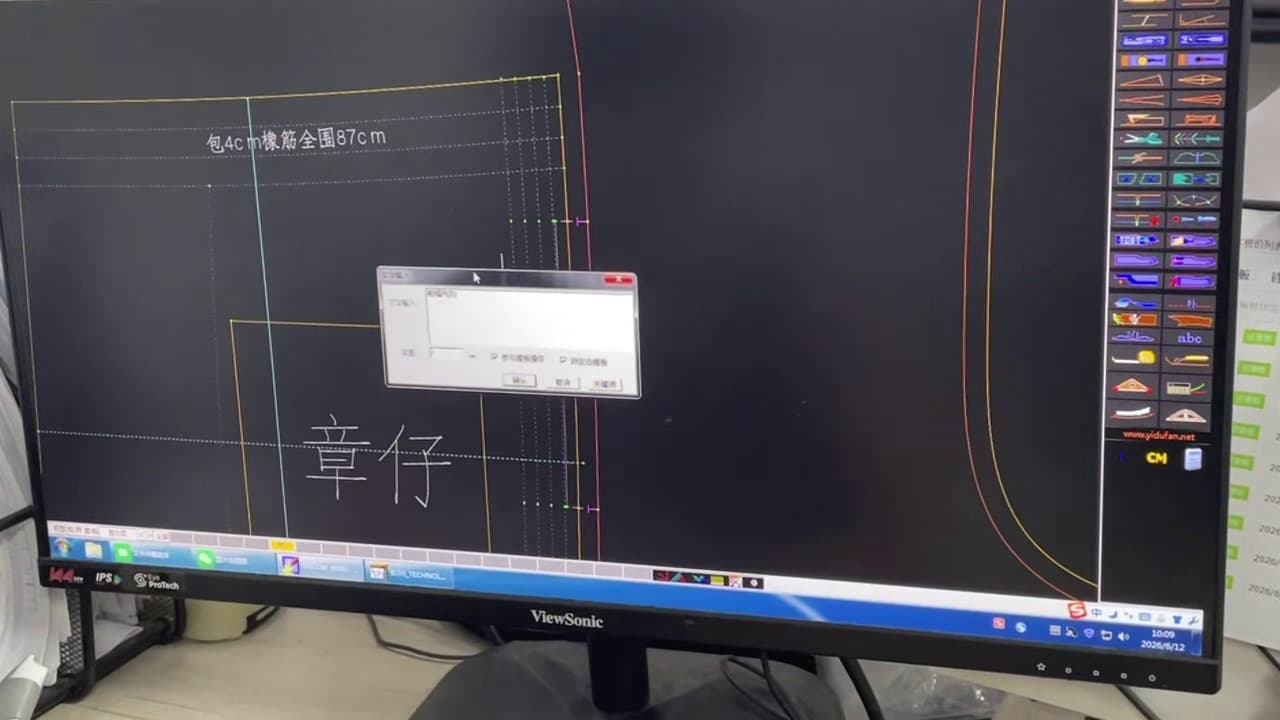
      Garment pattern being drafted in CAD software at Meiting Garments pattern room
      CAD pattern work turns approved measurements and construction decisions into a repeatable production input. Frame from Meiting's own factory floor video — not a stock photo.
      08

      What a reference garment cannot prove by itself

      The finished garment may not disclose exact fiber content, yarn, knitting route, original GSM, dye recipe, shrinkage compensation, seam allowances, interlining, grade rules or supplier specification. One sample size also does not explain how the style should scale across a size range. Even a visually close copy can behave differently if the selected material, pattern balance, rib, wash, pressing or decoration route changes. Record the new product's own specifications and approve its own sample rather than treating the reference as an automatic bulk standard.

        09

        Can sampling start without a complete tech pack?

        Yes, if the factory agrees to a development route and the buyer provides enough controlled input to reduce blind assumptions. A reference garment, clear front and back images, target measurements, fabric direction, artwork, quantity, size range and keep/change notes can support an initial review or sample plan. Starting without a complete file does not remove technical documentation. It shifts part of the work into development. Before the result becomes repeatable, the accepted measurements, materials, construction, artwork, labels, packing and changes still need to be recorded and approved.

        • Identify the product, base size, intended fit and size range.
        • Provide front, back, inside and detail references where relevant.
        • State target fabric construction, handfeel, weight direction and finish.
        • Supply production artwork and branding files separately from mood images.
        • List quantity, colors, destination, timing and decisions that remain open.
        010

        Use a stage-based standard from quote to bulk

        For an early feasibility or budget discussion, a partial brief can be enough if the quote states its assumptions. For the first sample, the factory needs a controlled sample objective and enough dimensions, material direction and construction decisions to produce something that can be evaluated. For revisions, comments should state the observed issue, actual measurement or visual reference, requested change and controlling file version. Before bulk, the written specification, approved sample, material and decoration references, label and packing files, tolerances and accepted exceptions should be released together.

          011

          How to annotate a reference garment

          Photograph and label the garment before sending it. Record custody, brand or owner, sample size and whether the factory may open a seam or perform any destructive review. Use numbered callouts that correspond to a written keep/change table. For example, keep the shoulder drop and hood volume, increase body length, replace the fabric with a heavier direction, remove the original branding, move the new artwork to a measured position and use your own label package. The annotation makes the reference a communication tool instead of an invitation to guess.

            012

            Resolve conflicts between the file and the garment

            A reference may measure differently from the tech pack. The fabric described in the BOM may not match the handfeel of the sample. Artwork placement in a flat sketch may conflict with the physical panel shape. Do not let the factory choose silently which source wins. Create a conflict log, assign a decision owner and update the controlling record. The newest email is not automatically the newest approved specification. Use dated version numbers and archive replaced files so sampling, costing and QC teams work from the same state.

              013

              Hoodie and T-shirt examples

              For a heavyweight hoodie, a reference garment can show hood volume, body bulk, rib relationship and interior handfeel. The written file still needs target measurements, fabric and rib specifications, panel construction, artwork, trims, labels, packing and any wash or shrinkage controls. For an oversized T-shirt, the reference can show shoulder drop, body width, sleeve proportion, collar shape and drape. The technical standard must identify base-size POMs, grade rules, neckline and rib requirements, jersey direction, artwork placement, label details and the measurement condition used for approval.

                014

                What to send for a Meiting file review

                Send the current tech pack or partial file, reference garment or images, product and base size, size range, measurements, material direction, construction, artwork, labels, packaging, colors, estimated quantity, destination and required timing. Mark what is approved, what should change and which questions need a factory proposal. Meiting can identify version conflicts and open decisions before costing or sampling. Feasibility, material route, price, sample objective, revision work and timing remain subject to the actual files and project review; a document review does not replace buyer approval of the physical sample.

                  015

                  Frequently Asked Questions

                  Use these answers to keep the comparison connected to a written project scope and approval record.

                  • Is a reference garment the same as a tech pack? No. A reference garment is physical evidence of fit, handfeel and construction direction. A tech pack records measurable specifications, materials, artwork, labels, packing and revisions. They are complementary controls.
                  • Can a clothing manufacturer make a sample without a tech pack? Often yes, if the manufacturer accepts development from a reference, sketch, images or brief and enough key decisions are provided. Missing technical information still has to be documented and approved before repeatable production.
                  • Do I need a tech pack if I have a reference garment? A reference can start development, but it usually does not define intended changes, grading, material specifications, artwork, labels, packing or revision control. Build a controlled written specification as the project develops.
                  • Does a complete tech pack replace garment sampling? No. The file provides instructions; the sample tests how those instructions work as a physical garment. Fit, handfeel, construction, decoration and workmanship still require review and approval.
                  • What should I mark on a reference garment? Mark which fit, fabric, construction and detail directions should be kept, what must change, what must not be copied and which measurements or materials need confirmation. Use numbered callouts linked to written notes.
                  • Which source controls if the tech pack and sample disagree? The project team must make and record that decision. Update the controlling specification or sample approval record so the factory, buyer and QC team do not follow different standards.

                  Approval Checklist

                  • task_altRegister every current file, sample, image and comment source.
                  • task_altConfirm ownership and permission for the reference garment or design input.
                  • task_altState the reference size and the intended base size.
                  • task_altPhotograph front, back, inside and critical details.
                  • task_altCreate a numbered keep/change annotation list.
                  • task_altDefine target measurements, fabric direction and construction questions.
                  • task_altSeparate production artwork from inspiration images.
                  • task_altRecord labels, packaging, colors, size range and quantity.
                  • task_altList quote assumptions and sample-stage open decisions.
                  • task_altUpdate the controlled file after every approved revision.
                  • task_altResolve conflicts between the tech pack and physical sample in writing.
                  • task_altRelease the current spec, approved PP sample and supporting references together before bulk.

                  What Can Go Wrong

                  • errorSending a branded garment with the instruction to copy everything.
                  • errorUsing a reference sample without recording what should stay and what should change.
                  • errorTreating one physical size as a complete grading standard.
                  • errorAllowing the factory to select materials from appearance alone.
                  • errorKeeping accepted revisions only in WhatsApp or email threads.
                  • errorUsing an old tech pack after a newer sample has been approved.
                  • errorStarting bulk without one released spec version and approved physical standard.

                  What to Send the Manufacturer

                  • Product type and reference
                  • Quantity by style and color
                  • Size range and target fit
                  • Fabric, GSM, and handfeel
                  • Artwork and decoration method
                  • Labels and packaging
                  • Destination country
                  • Target launch or delivery date
                  Send these details in your RFQ

                  Factory Evidence

                  This guide uses Meiting factory-process images where the visible operation supports the production point being discussed.

                  • Artwork and visual references can start development, but dimensions, materials, placement, and revision status still need a controlled written record. Frame from Meiting's own factory floor video — not a stock photo.
                  • CAD pattern work turns approved measurements and construction decisions into a repeatable production input. Frame from Meiting's own factory floor video — not a stock photo.
                  Review Meiting factory process videos

                  Want us to review your project details?

                  Send your tech pack, reference photos, quantity, target timeline, or current supplier problem. We will respond with a practical next step.

                  Send RFQ