
Meiting Garments logo mark

Fabric & Printing · 10 min read

100% Cotton vs Cotton-Polyester Blend: How to Choose Fabric for T-Shirts and Hoodies

Two swatches arrive for a new T-shirt. One is labeled 100% cotton; the other contains cotton and polyester. You can feel a difference, but the labels alone do not tell you why—or which fabric will make the better garment.

Quick Answer

Choose the specific fabric that meets your garment brief, not a fiber percentage in isolation. Start with 100% cotton if that composition is a product requirement. Consider a cotton-polyester blend if its actual surface, drape, print and care results suit the garment. Compare samples with similar construction, weight, color and finish where possible. Print and wash the selected samples under agreed conditions, measure the changes, and record the approved fabric reference before production. A blend is not a guarantee against shrinkage, and cotton is not a guarantee of softness or quality.

By Meiting editorial team · Published · Editorial policy
Apparel Buyer GuideBuilt for apparel buyers preparing a production brief
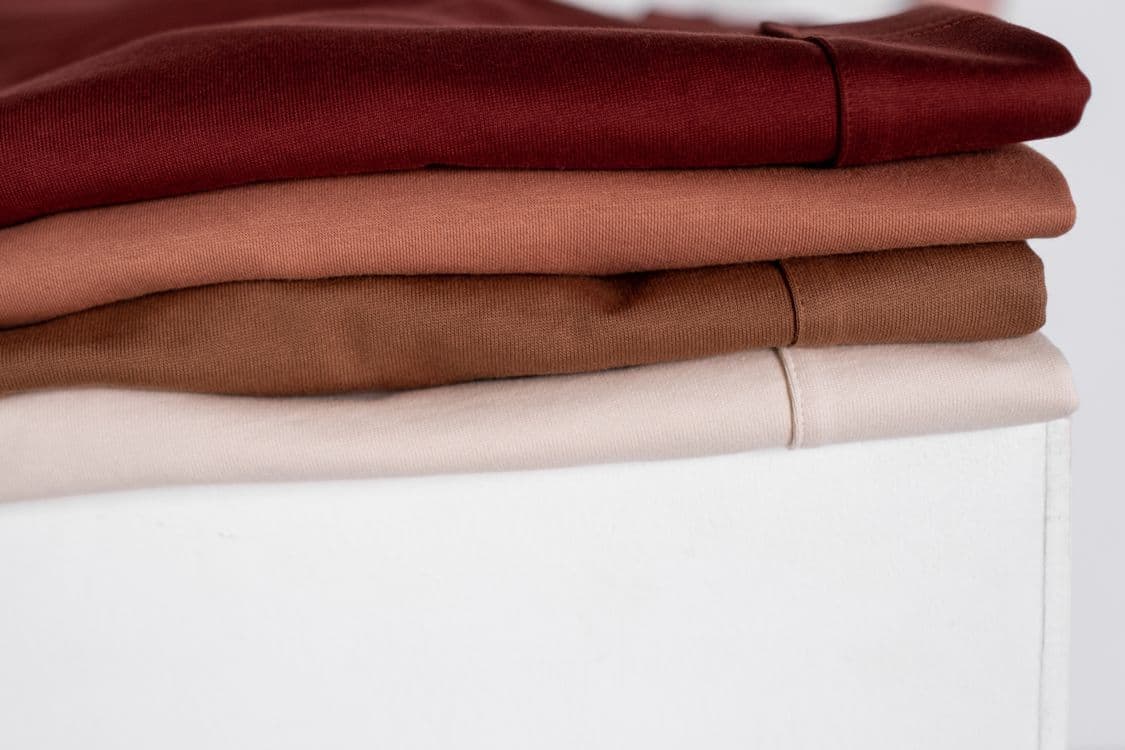
Folded neutral-tone garments showing fabric surfaces
Illustrative stock photo of folded garments; the fiber composition is not established by this photo. Photo: Ron Lach / Pexels. Image source.
01

What the label does—and does not—tell you

Cotton and polyester are fibers. A cotton-polyester blend contains both; the percentages describe a composition, such as the proportion by mass stated for the fabric. Ask whether the supplier's description covers the whole fabric or only its face. A “100% cotton face” does not necessarily mean the entire fabric is 100% cotton.

Jersey, French terry and fleece describe construction or finish rather than a fixed fiber recipe. A hoodie may use cotton fleece or a cotton-polyester fleece. GSM is fabric mass per square metre; it is not the blend percentage, softness, thickness or quality rating. Yarn, knitting and finishing also affect what you feel.

For a wider overview, see the streetwear fabric guide and fabric and material library.

02

Cotton vs cotton-polyester: what should you compare?

Buying questionWhat the composition tells youWhat to inspect or requestHow to act on the result
Is the fiber content right for the product claim?A 100% cotton label and a cotton-polyester label make different composition claims.Ask for overall composition and the basis for the claim; distinguish the printable face from the whole fabric.If a cotton-only composition is required, do not approve a blend merely because the face is described as cotton.
Will the tee hang the way I want?Neither label alone establishes drape or structure.Handle similar-weight jersey samples; compare them as garments if possible, including shoulder, hem and the printed area.If the body collapses or feels too rigid, review knit, yarn, weight or finish instead of changing the ratio blindly.
Will the hoodie feel right inside?A blend can be used in both terry and fleece; composition does not specify the inside surface.Inspect the face, looped or brushed inside, hood and matching rib.If warmth or inside feel is wrong, compare the construction and finish as well as fiber content.
Will my print look right?The fiber label is only part of print compatibility.Request the same artwork at the intended size on the actual color and finished surface. For blends, discuss heat and possible dye migration.If the color, adhesion or feel is unacceptable, revise the print/fabric combination and re-sample.
Will dimensions change after washing?Neither label guarantees a specific shrinkage percentage.Measure marked points before and after the same agreed treatment; record method and sample reference.If the change exceeds the project's agreed limit, investigate finishing, measurements or an alternative fabric before approving bulk.
Which option costs less?The ratio alone does not establish cost or availability.Compare actual material, dye, minimums, lead time, sample and freight terms for similar scopes.Ask for a revised quote when options differ in weight, finish or included work; do not compare the fabric line in isolation.
03

Compare two fabrics fairly

Ask for the following alongside each swatch. If you cannot keep a factor the same, record the difference so you do not attribute every result to fiber content:

  1. Composition: overall cotton/polyester percentages, plus any separate face-fiber description.
  2. Construction and finish: jersey, terry or fleece; yarn and surface information available; brushed, washed or other finish.
  3. Weight: stated or measured GSM and whether it refers to the finished fabric.
  4. Color and source: shade, supplier/fabric reference and whether the sample represents the intended production material.
  5. Print and care: artwork, ink or transfer route, any garment wash, and proposed care conditions.
  6. Commercial scope: available quantity, fabric minimum, lead time, sample charges and quote inclusions.

For example, if the cotton sample is a smooth jersey and the blend is a heavier brushed fleece, the difference in feel cannot be credited to fiber composition alone. Ask for comparable jersey options if the purpose is a T-shirt comparison. If comparable swatches are unavailable, use the samples to choose between the complete fabrics, not to make a universal claim about all cotton or blends.

04

Decide for a graphic T-shirt

Start with the desired silhouette and graphic. If the target is a structured, boxy T-shirt with a large print, handle the body fabric without a print first; then compare a full-size printed sample. Check the shoulder and body drape, the print's flexibility and whether the neck rib returns to shape. The fabric weight, pattern, rib and print coverage all contribute to the finished look.

For a blend, ask the printer whether the chosen ink or transfer is suitable for the surface, color and finishing route. If a light print on a dark or polyester-containing fabric changes color after processing or care, ask for the supplier's assessment and another sample. Do not assume the problem is the fiber percentage alone.

The heavyweight T-shirt GSM guide addresses weight as a separate decision. The graphic T-shirt sample case discusses a cotton jersey direction, neck rib, artwork placement and sample review. It does not publish a controlled cotton-versus-blend test or a numerical shrinkage result.

05

Decide for a hoodie

Compare the outside and inside together. A brushed interior, loopback terry and an unbrushed knit can feel very different even if their fiber labels match. Pull gently across the fabric and rib, then allow them to recover; use that handling only as an initial observation, not a laboratory test. Try the hood and assess the weight and drape of the finished garment, because panels, seams, rib and trims also affect the result.

If you are weighing a cotton hoodie against a polyester hoodie, a cotton-polyester blend is a third material category, not another name for 100% polyester. Ask for a breakdown of the actual materials and compare like-for-like garments. For construction and weight, read how to choose fabric for a heavyweight hoodie.

06

Make the wash comparison useful

Agree on the care treatment and what will count as acceptable before the samples are washed. Mark and record the same garment measurement points for each sample, such as body length and width; use a consistent measuring technique and record each direction separately. Keep an unwashed control where practical.

For each measurement, calculate:

Dimensional change (%) = (measurement after treatment − measurement before treatment) ÷ measurement before treatment × 100.

A negative result means the measured dimension became smaller. Record the treatment, number of cycles, drying method and sample reference. Check print appearance and garment shape too. A supplier or test laboratory can advise on an appropriate recognized method for the destination and use; agree the method and limits for your project rather than borrowing a percentage from an unrelated garment.

If the change is outside your agreed tolerance, do not approve it on the promise that “blends do not shrink.” Check whether the same fabric and finishing were used, review the measurement and care method, and discuss a revised sample or material. See fabric shrinkage testing before bulk.

07

Compare quotes and approve the fabric

Request quotes against the same garment pattern, fabric specifications, color, order quantity, size range, decoration, trims, sampling and delivery terms. Different fabric minimums or dyeing charges can change the total. Ask the supplier to identify where the quotes differ instead of treating a lower fabric price as a lower landed garment cost.

Before authorizing production, record the fabric source and reference, overall composition, construction, finished weight, color, finish and matching rib. Attach the accepted physical sample and identify the artwork version, placement, care treatment and outstanding questions. Bulk lots may still vary; agree how incoming material and production will be checked.

Meiting's usual starting point for custom production is 150 pieces per style/color. Fabric, dyeing, decoration and trims may have separate conditions; confirm the actual minimum and availability for your project.

08

What to send your supplier

Share the garment reference, target fit, desired handfeel, composition requirement if any, color or wash, artwork, order quantity and destination. If you have a sample garment, specify what you want to keep and what you want changed. Start with fabric sourcing, or discuss the finished garment through custom T-shirt manufacturing or custom hoodie manufacturing.

Buyer questions

Frequently Asked Questions

Is 100% cotton better than a cotton-polyester blend?

It depends on the product requirements and the particular fabrics. If a cotton-only composition is required, choose and verify that specification. Otherwise compare the specific fabric's feel, construction, decoration and care result against the garment brief.

What is cotton-polyester fabric?

It is fabric containing both cotton and polyester fibers. The ratio can vary, and it does not tell you the complete construction, finish or performance. Ask for the whole-fabric composition rather than relying only on a face description.

Does cotton-polyester always shrink less than cotton?

No percentage by itself guarantees a particular dimensional change. Construction, finishing, treatment and care conditions matter. Compare actual materials using the same agreed test and measurement points.

Can you print on a cotton-polyester blend?

Often, yes, with a compatible process and materials. Ask the supplier to assess the actual surface, dye, garment color and heat exposure, then review the artwork on a sample made for your project.

Is a 100% cotton face the same as 100% cotton throughout?

Not necessarily. The face and overall composition can be described separately. Ask for the whole-fabric composition and what the face claim covers.

Approval Checklist

  • task_altTarget quantity by style/color
  • task_altReference photos, tech pack, or physical sample
  • task_altFabric composition, GSM, color, and handfeel target
  • task_altArtwork files and decoration method
  • task_altLabel, hangtag, polybag, and carton requirements
  • task_altSample approval criteria and measurement tolerance
  • task_altDelivery country, launch date, and receiving requirements

What Can Go Wrong

  • errorComparing unit prices before checking sample, label, packaging, QC, and freight scope
  • errorChanging fabric, artwork, or packaging after sample approval
  • errorSkipping written sample comments before bulk production
  • errorSending an RFQ without quantity, size range, decoration method, or delivery country

What to Send the Manufacturer

  • Product type and reference
  • Quantity by style and color
  • Size range and target fit
  • Fabric, GSM, and handfeel
  • Artwork and decoration method
  • Labels and packaging
  • Destination country
  • Target launch or delivery date
Send these details in your RFQ

Factory Evidence

Use the factory process library to review production, decoration, QC, and packing operations relevant to this decision.

Review Meiting factory process videos

Want us to review your project details?

Send your tech pack, reference photos, quantity, target timeline, or current supplier problem. We will respond with a practical next step.

Send RFQ